I used to avoid blue because I thought it would feel cold. Then I learned how to pair warm textures and the right whites. These rooms are simple, lived-in choices I’ve used or fixed in real homes—returned a duvet, re-hung a curtain, kept what actually worked. You can do this without overthinking.
I’ll show clear ideas, what to buy, and one honest thing I learned on each look.
24 Elegant Blue And White Bedroom Designs For A Timeless Look
These 24 ideas are practical blue and white bedroom designs I’ve actually tried or fixed in real rooms. Each idea is short, visual, and includes exactly what I used so you know what to buy. Expect textiles, lighting, small furniture tweaks, and one real tip per look.
1. Classic Navy-and-White Striped Bedding Set
I swapped a patterned quilt for a navy-and-white striped duvet and the room instantly felt calm. Stripes read crisp against white walls and make the bed the focal point. I once bought too-thin fabric and it looked cheap; choose a mid-weight cotton.
Visually it grounds the space without being busy. I pair it with solid white Euro shams and one navy throw pillow for balance.
What You’ll Need for This Look
- Navy striped duvet cover (queen, cotton)
- White Euro pillow shams (26×26, cotton)
- Navy throw pillow (18×18, linen)
2. Soft Blue Accent Wall Behind the Bed
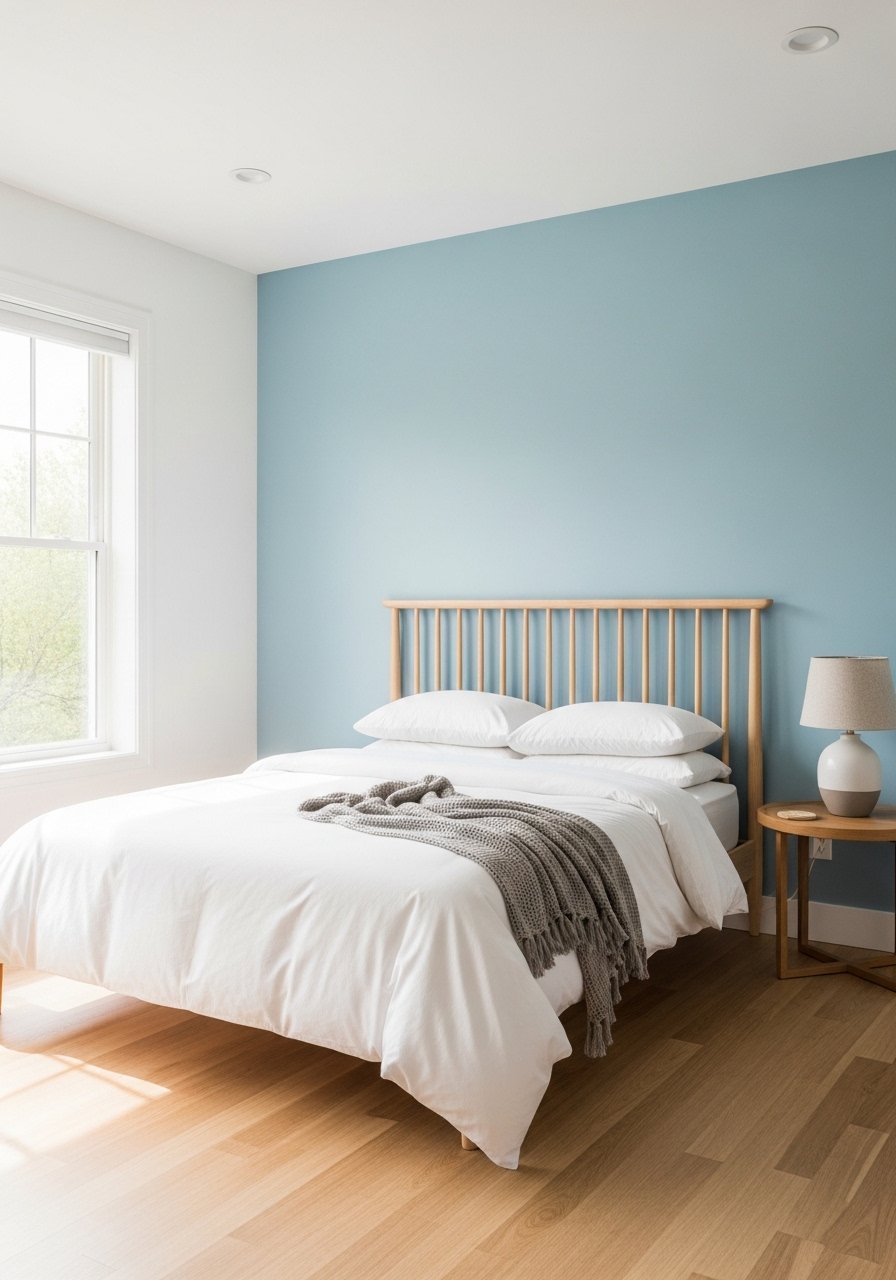
I painted one wall a muted blue instead of the whole room. It’s the simplest way to add depth and keeps the room cozy. My mistake was choosing a too-bright sample — it read electric at night. Pick a soft, gray-blue sample and live with it for a week.
The rest stays white so the blue feels intentional, not overwhelming. It’s calming for sleep and makes white textiles pop.
What You’ll Need for This Look
3. Indigo Shibori Pillow Mix for Organic Pattern
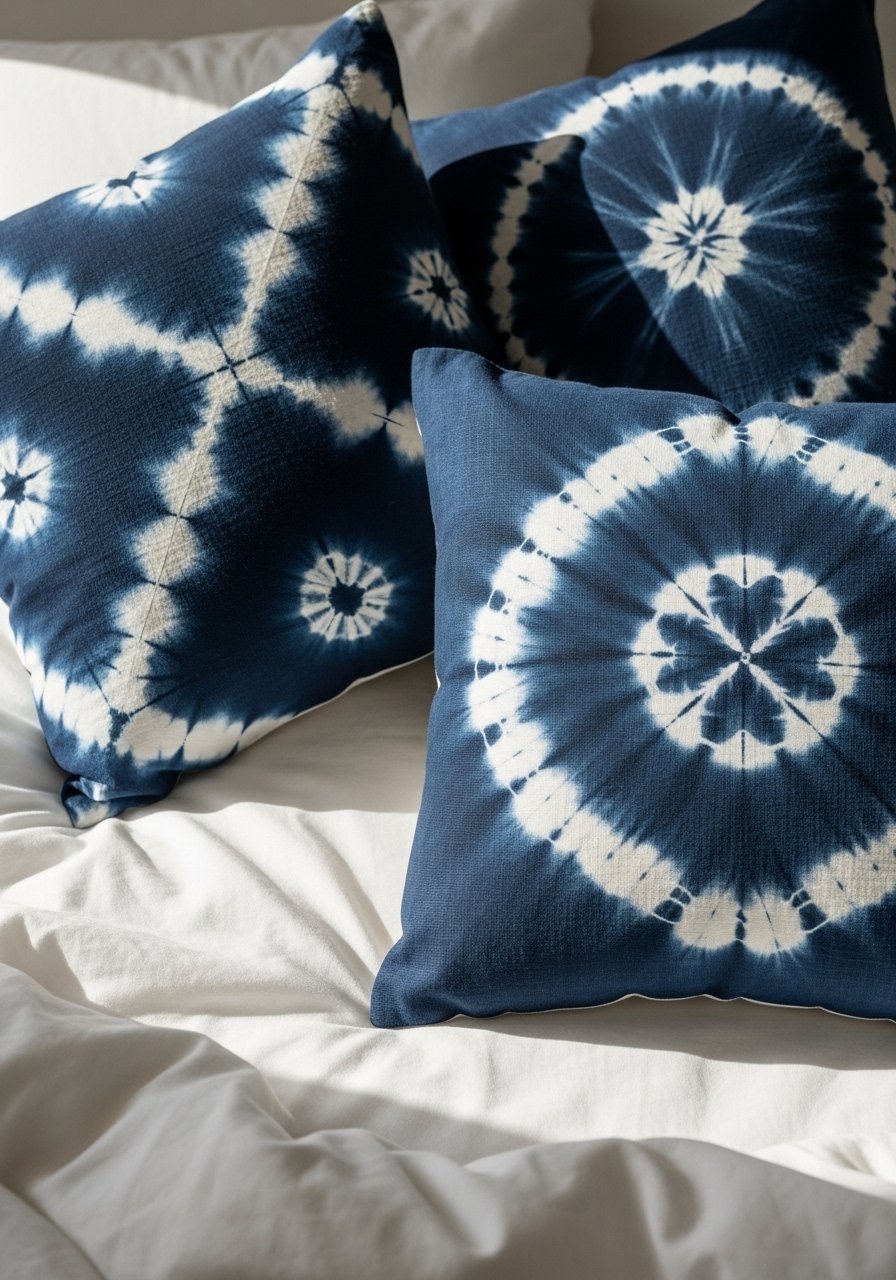
I collect indigo-dyed pillows to add an artisanal touch. They break the formality of navy and bring warmth. Early on I went too matchy-matchy; now I mix several shibori patterns for an effortless look.
They’re small but change the mood—more relaxed and layered. I use three sizes and keep the rest of the bed simple so the patterns read intentional.
What You’ll Need for This Look
4. White Linen Bedding with a Navy Velvet Headboard
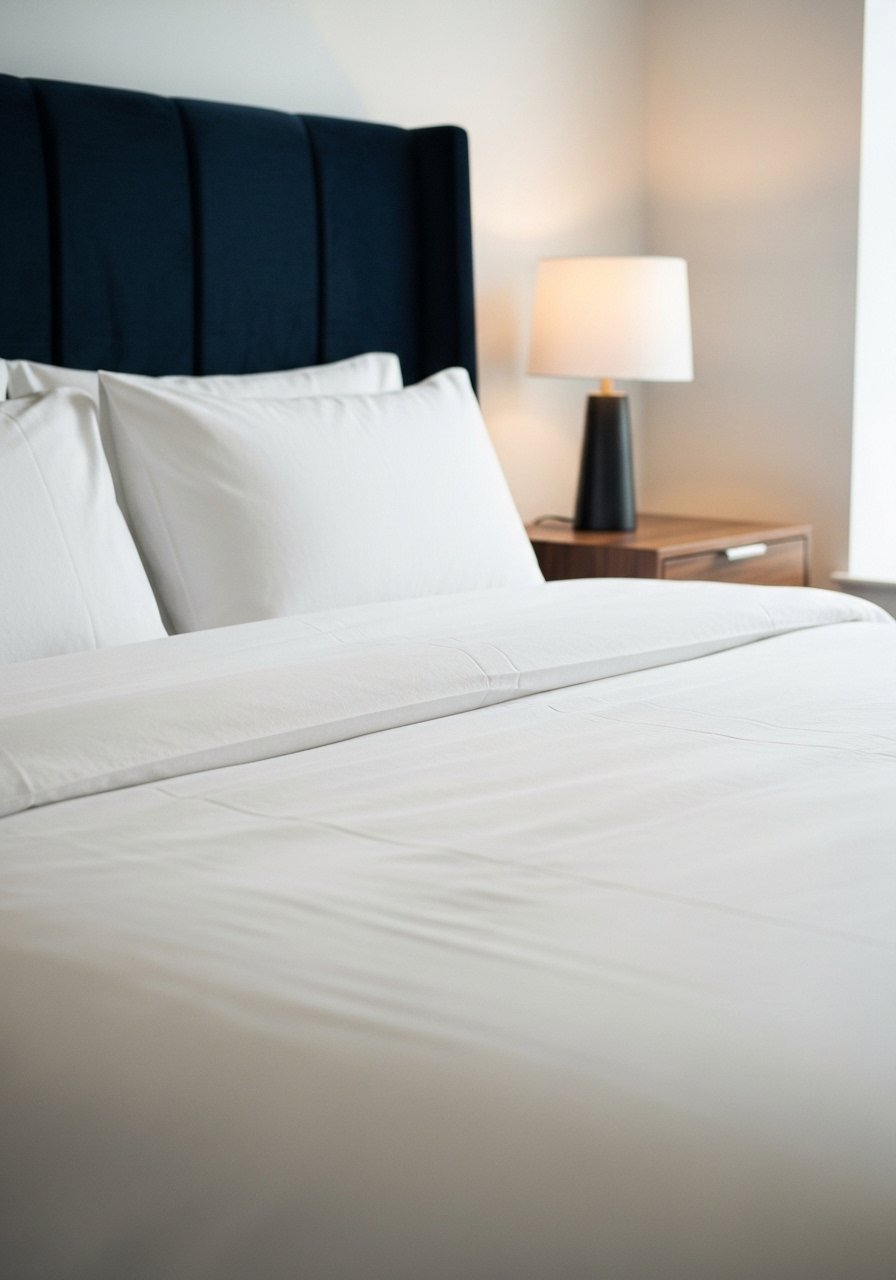
A navy velvet headboard felt luxe without fuss. I paired it with white linen bedding to keep things relaxed. At first I picked a headboard that was too short — it looked lost — so measure before buying.
The velvet adds depth and the linens keep it casual. It reads intentional, not formal, and the navy anchors the whole palette.
What You’ll Need for This Look
5. Blue-and-White Floral Wallpaper on an Accent Nook
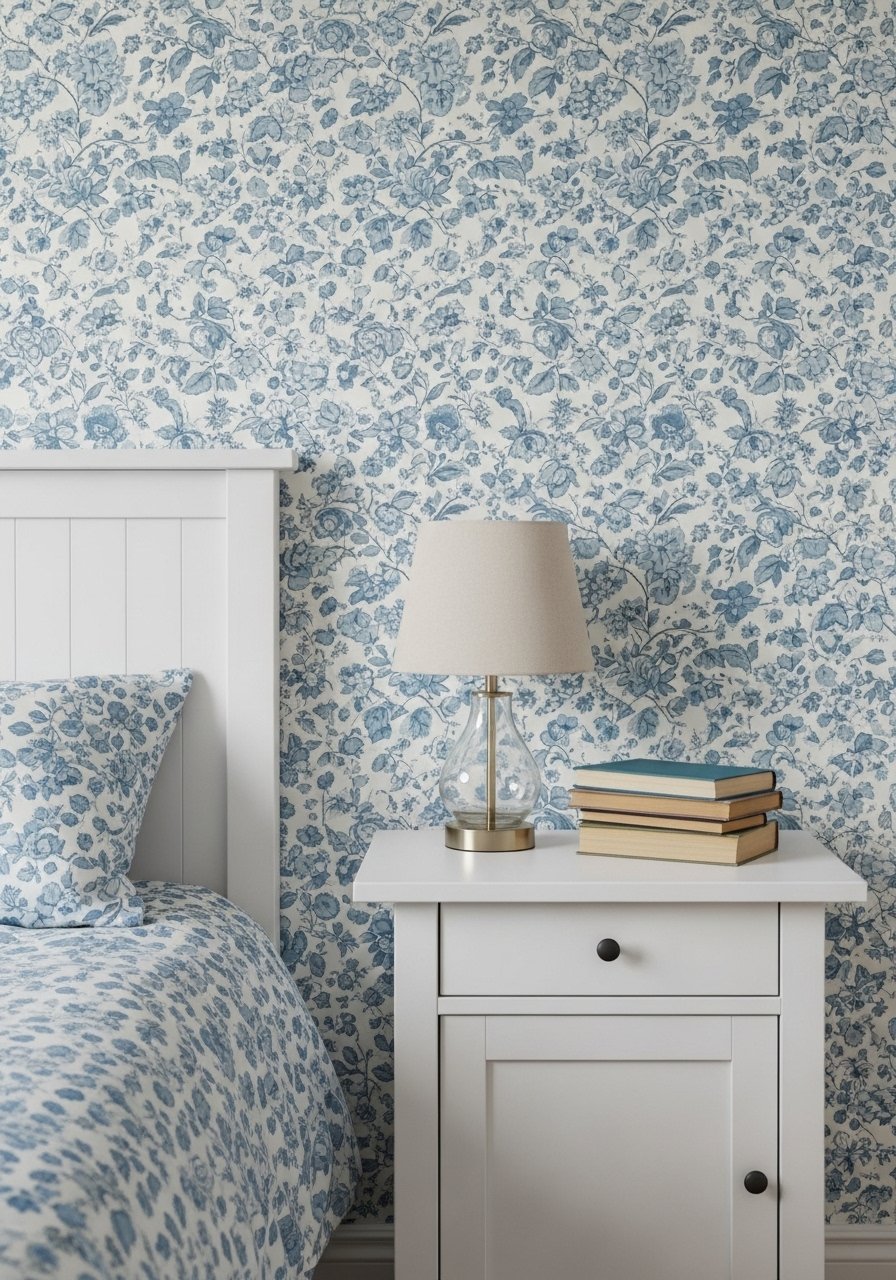
I papered a small alcove behind the bed with blue-and-white floral wallpaper. It’s bold but contained. I once wallpapered an entire room and regretted it; a nook keeps the pattern from overwhelming.
It reads fresh and classic. Pair with simple white bedding and one coordinating floral pillow to tie it all together.
What You’ll Need for This Look
6. Layered Neutrals with Soft Blue Throw Accents

I learned layering after living with a flat-looking bed for years. Beige throws, white sheets, and a soft blue throw bring warmth and cohesion. My early mistake was too many patterns; now I keep patterns minimal and rely on texture.
This approach feels lived-in and comfortable. The blue throw is the finishing note, not the whole story.
What You’ll Need for This Look
- Cream chunky knit throw blanket (50×60)
- Light blue throw blanket (50×60)
- Neutral linen pillow covers
7. Navy Trim on White Curtains for Subtle Drama
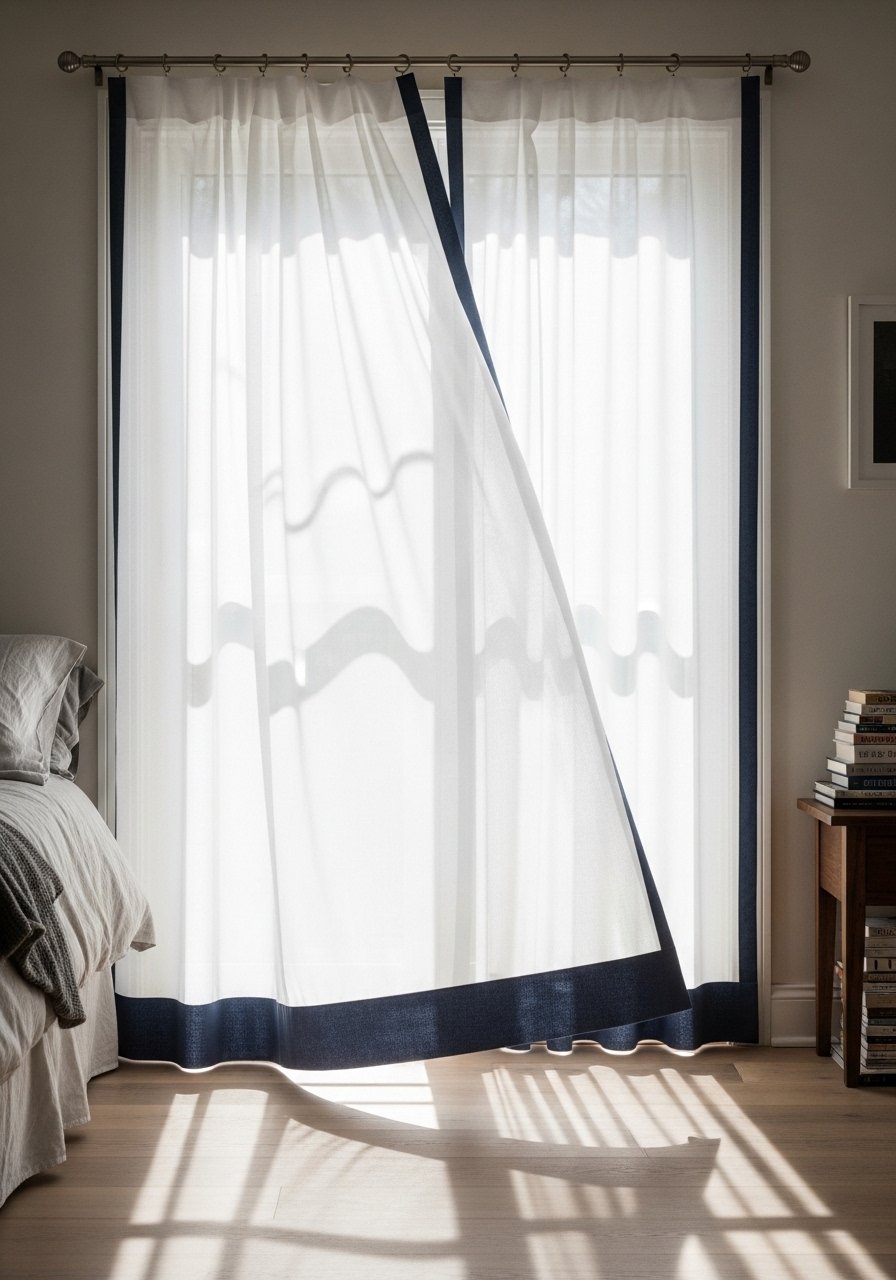
I swapped plain white sheers for ones with navy trim. It’s a small detail that reads tailored. I once bought heavy navy drapes and the room went dark—these trim sheers keep light and add contrast.
They frame the window and echo navy elsewhere in the room without stealing the show.
What You’ll Need for This Look
8. Coastal Driftwood Accents with Blue Pillows
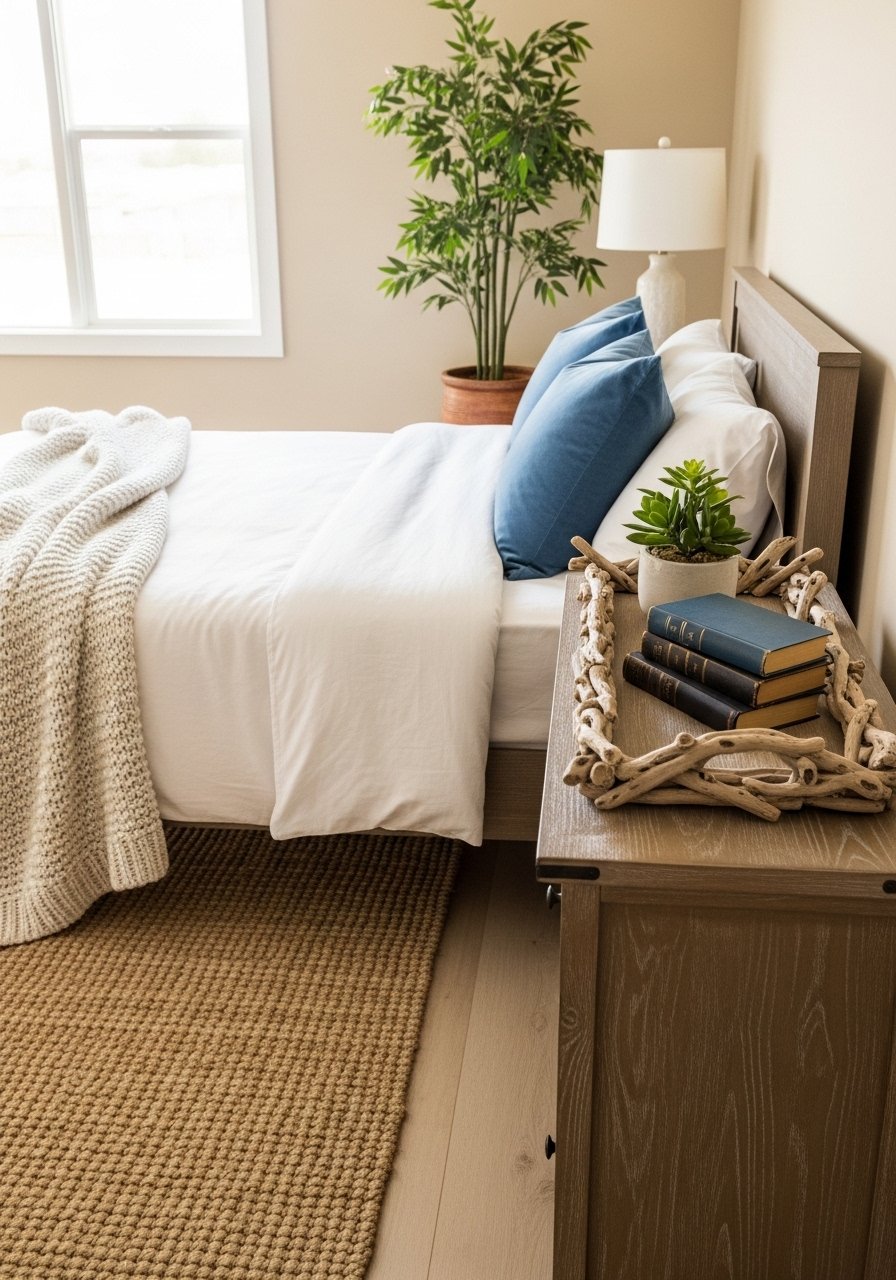
For a relaxed coastal feel I used driftwood frames and a small driftwood tray on the nightstand with blue pillows. It makes the room feel casual and gathered. I once overdid seashell decor; now I add one or two natural pieces.
It’s beachy without kitsch. The driftwood warms up the blue and white palette.
What You’ll Need for This Look
9. Crisp White Bed with Navy Accent Pillows
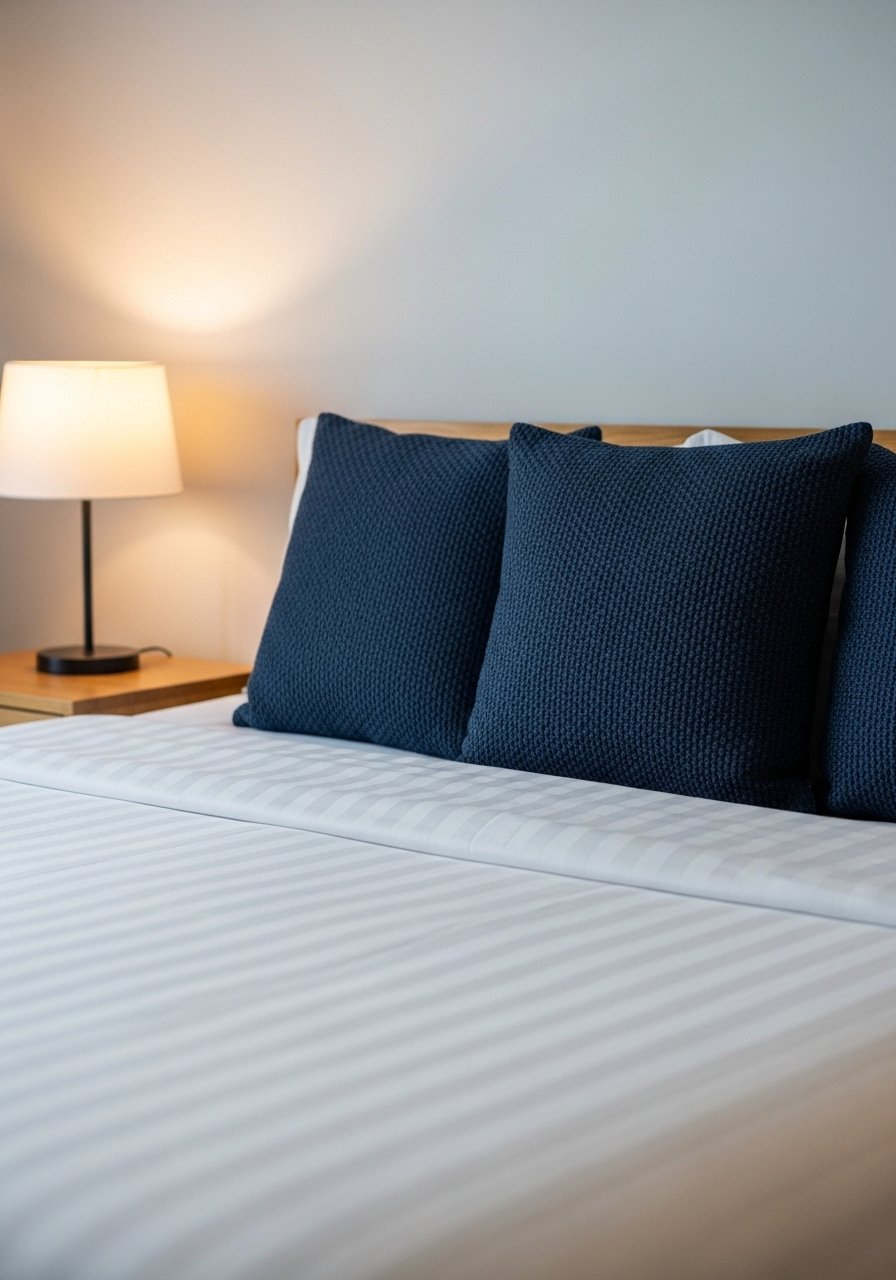
I went back to all-white bedding and added navy pillows for structure. White makes the room feel clean; navy gives it weight. I used to think white was high-maintenance—turns out the right wash routine and mattress protector keep it easy.
This is a good base if you like changing accent colors seasonally.
What You’ll Need for This Look
- White cotton duvet cover (queen)
- Navy accent pillows (set of 2)
- Waterproof mattress protector (queen)
10. Blue Patterned Rug Anchoring a White Room
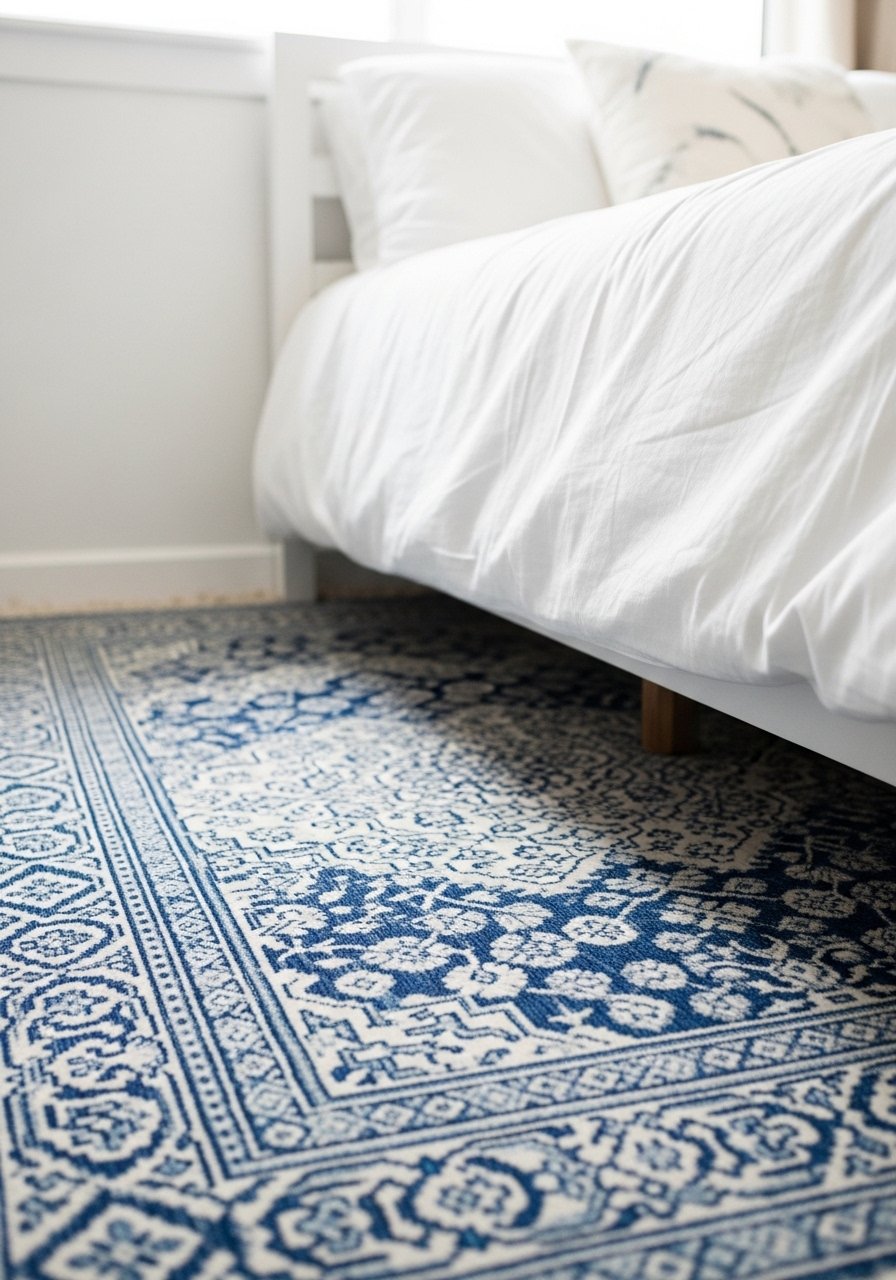
A patterned blue rug changed the scale and anchor of the room. I once bought a rug too small and it looked floating; size matters. Choose a rug that can sit under the front legs of the bed for cohesion.
The pattern hides daily life and makes the white walls feel intentional rather than plain.
What You’ll Need for This Look
11. White-painted Furniture with Blue Ceramic Lamps
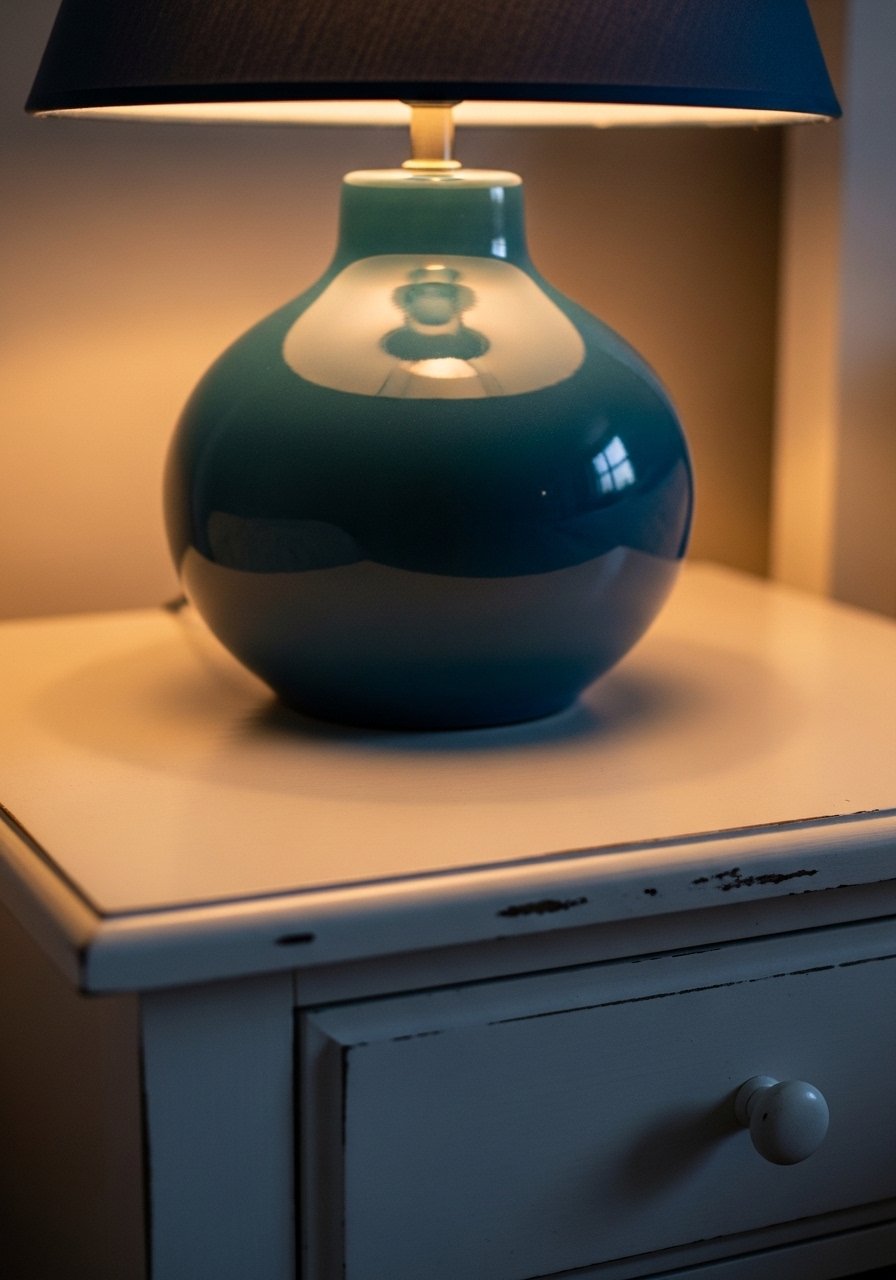
I painted an old nightstand white and added a blue ceramic lamp for a fresh look. The lamp’s glaze gives a soft color depth. I once bought a lamp that was too tall and it looked clumsy; scale matters.
This combo feels collected and intentional without spending much on new furniture.
What You’ll Need for This Look
12. Indigo Throw Blanket Draped Over the Bench
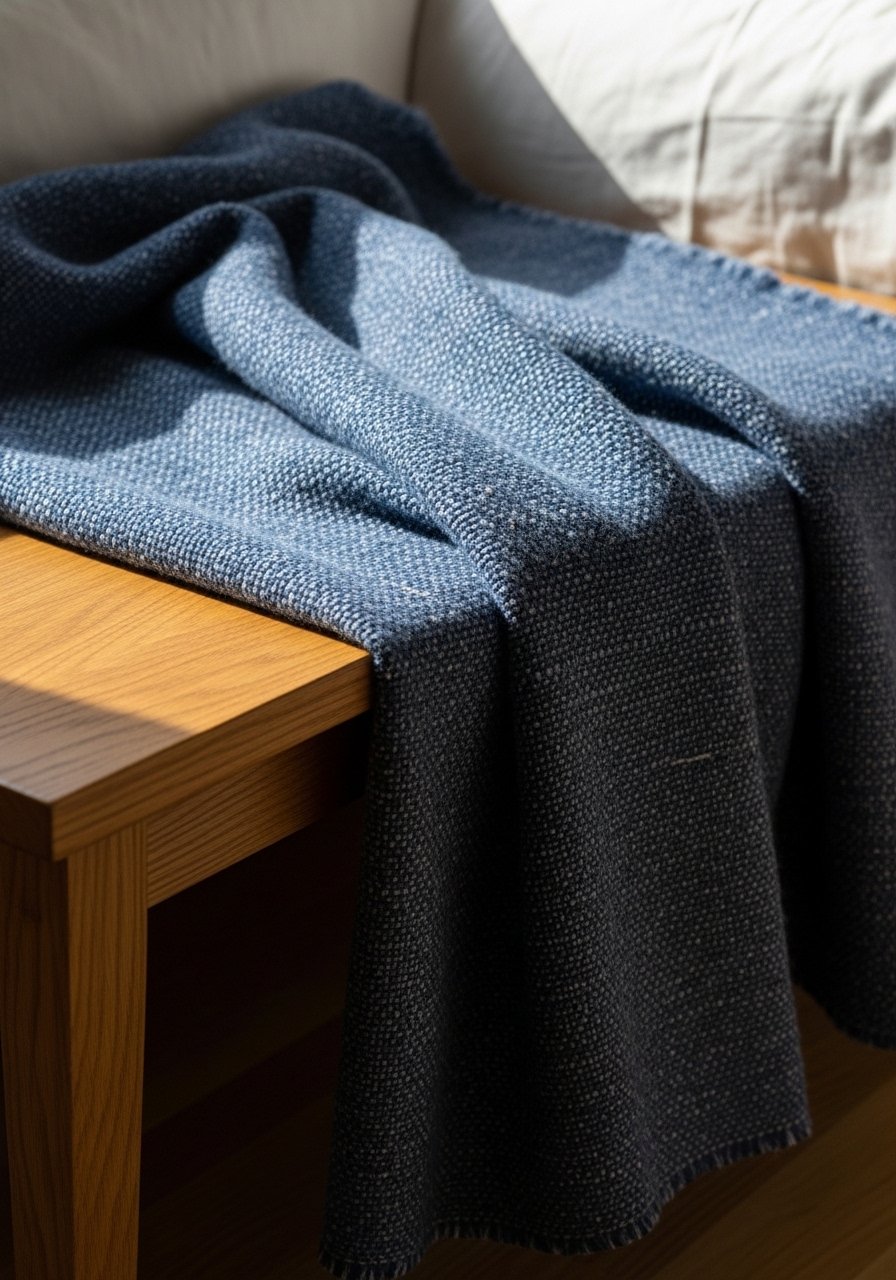
I drape an indigo throw over the end-of-bed bench to bring color low in the room. It makes the bed feel finished. I used to fold throws too neatly; a loose drape reads relaxed and usable.
It’s an easy swap when you want a seasonal change and it doesn’t compete with patterned pillows.
What You’ll Need for This Look
13. Blue-and-White Framed Prints Above the Bed
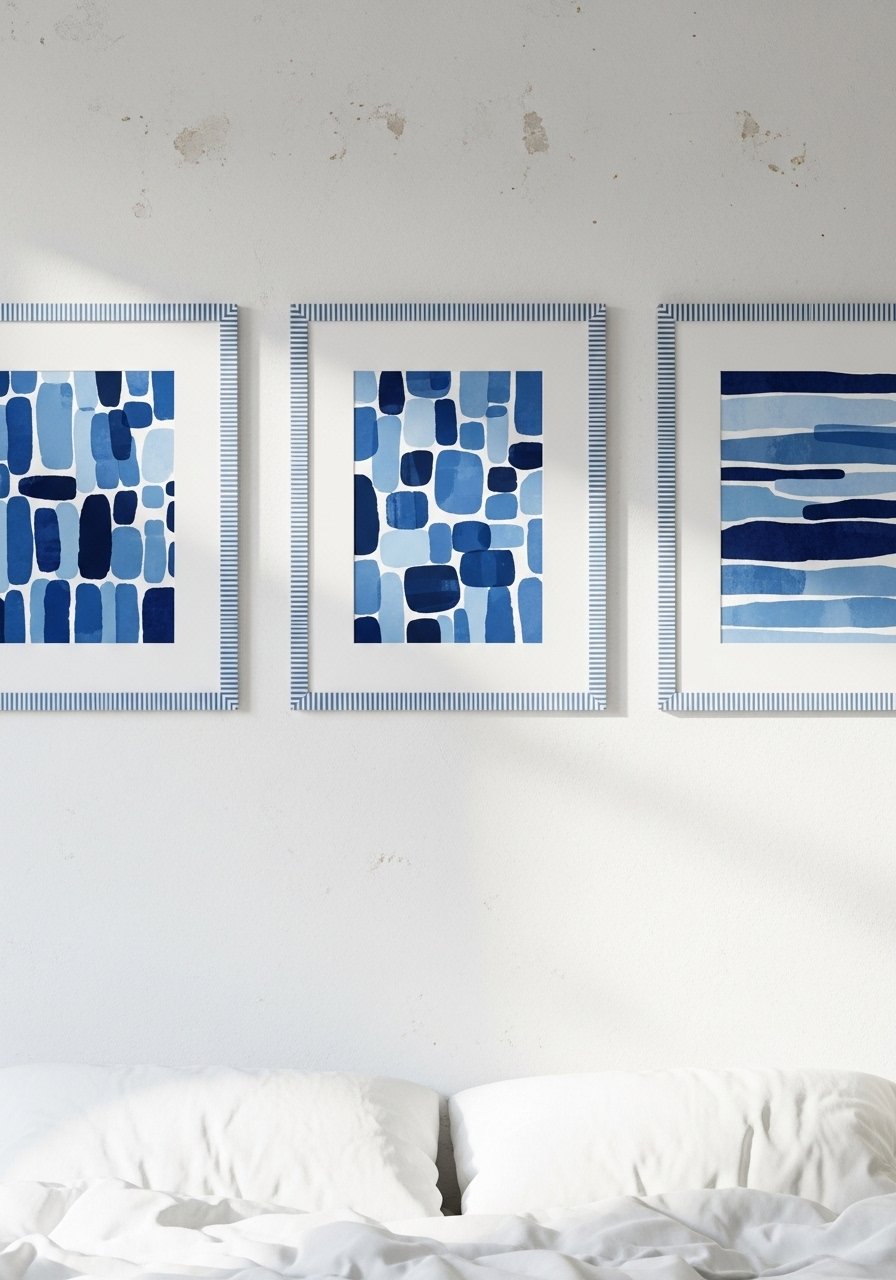
I hung three blue-and-white prints over the bed for symmetry. Frames in white or light wood keep the look soft. My first gallery was an odd mix—now I stick to similar tones and spacing.
It’s an easy, changeable way to add pattern and color without paint.
What You’ll Need for This Look
14. Pale Blue Painted Ceiling with White Trim
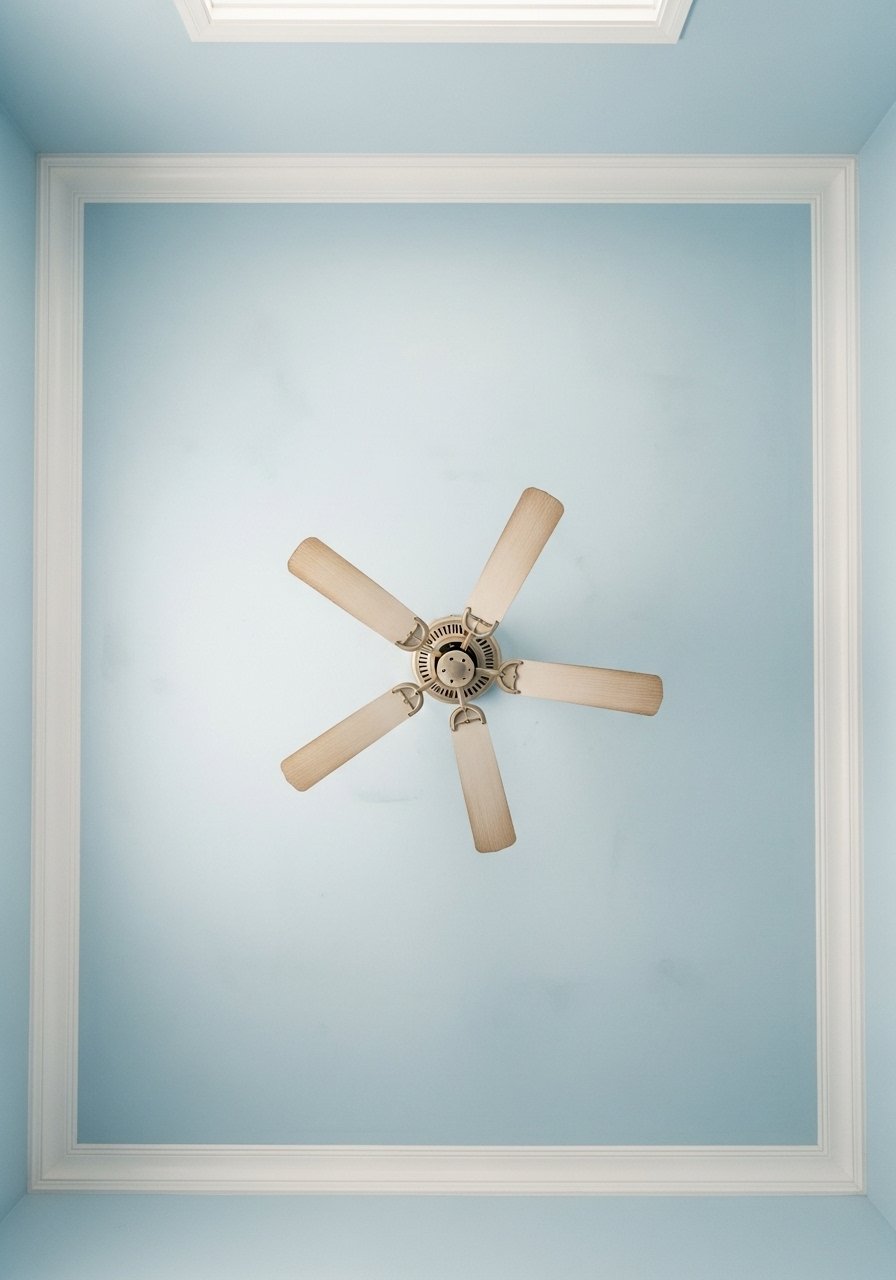
I painted my ceiling a pale blue and it made the room feel enveloping and soft. It was surprising how cozy it felt. I made sure the trim stayed white; otherwise the blue can feel flat.
It’s a small change with a big emotional payoff—like a subtle sky above the bed.
What You’ll Need for This Look
15. Nautical Rope Details on Shelving and Hooks
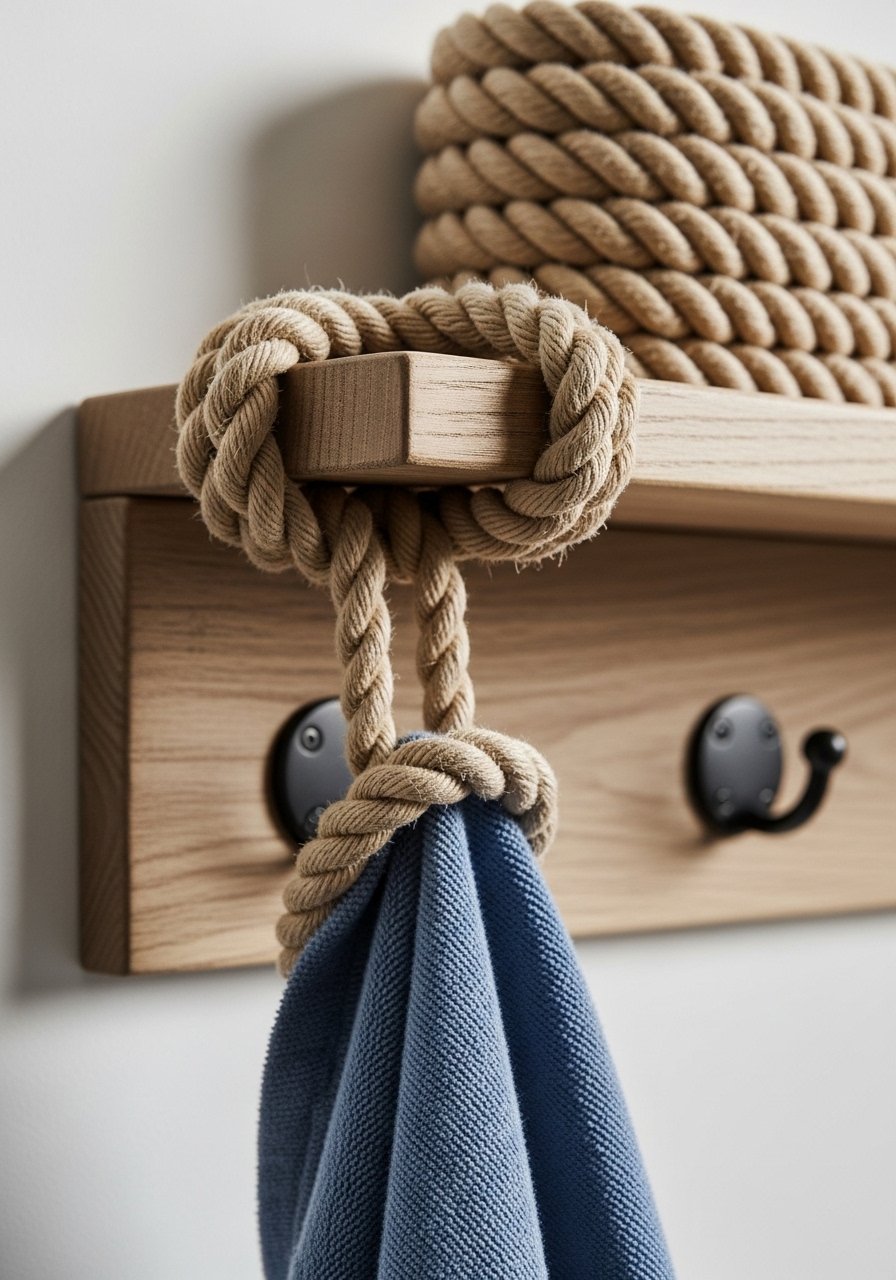
I wrapped rope around shelf edges and used rope-hooks for towels and robes. It adds a subtle nautical note without kitsch. I tried rope everywhere once and it felt overdone; now I use it sparingly.
These small touches nod to coastal blue-and-white without stealing attention from the bedding.
What You’ll Need for This Look
16. Blue Glass Lamps on White Nightstands
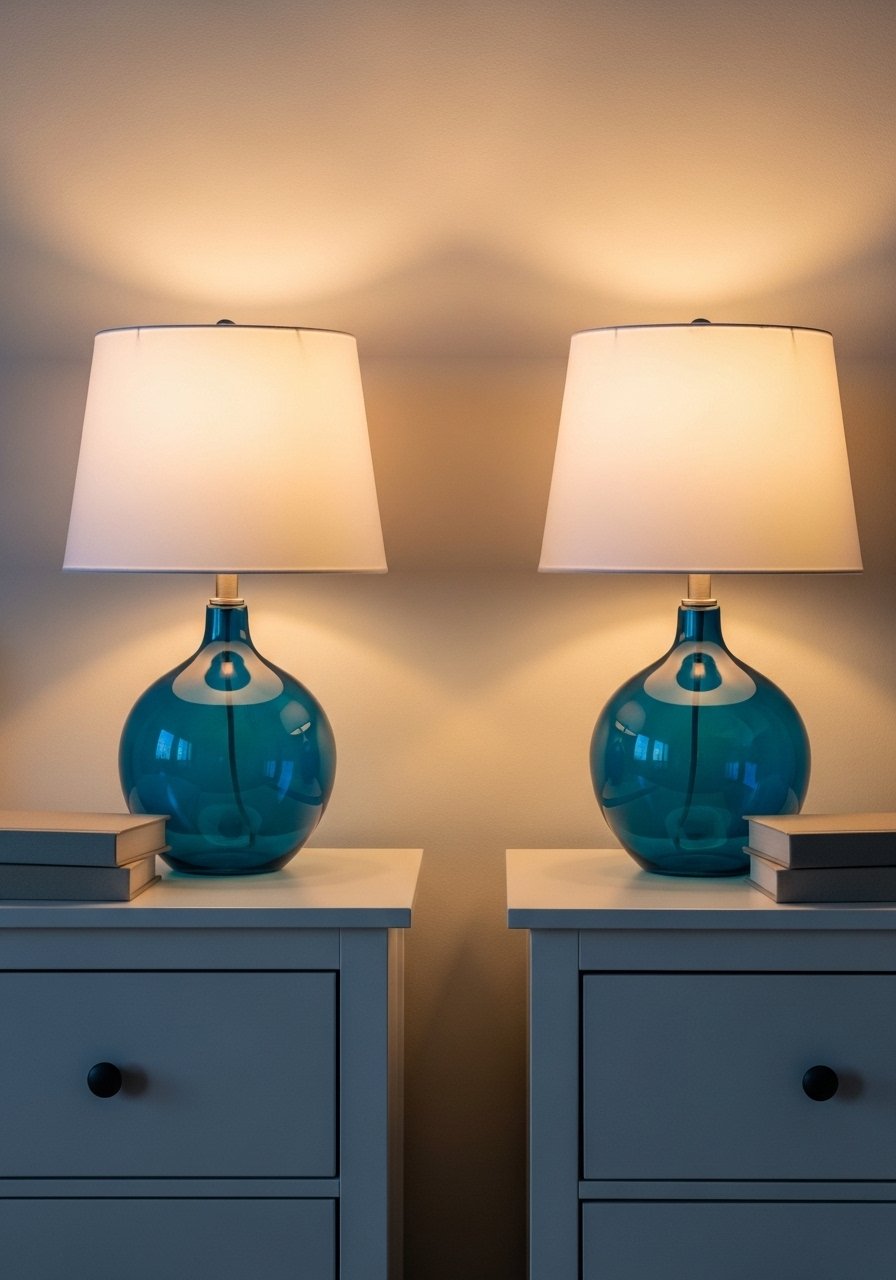
I swapped metal lamps for blue glass ones to add color and a reflective quality. They feel lighter and less heavy visually. My first glass lamps were too small; make sure the lamp height works with your mattress height.
They add color and a soft glow that complements white linens.
What You’ll Need for This Look
17. Board-and-Batten in White with Navy Accents
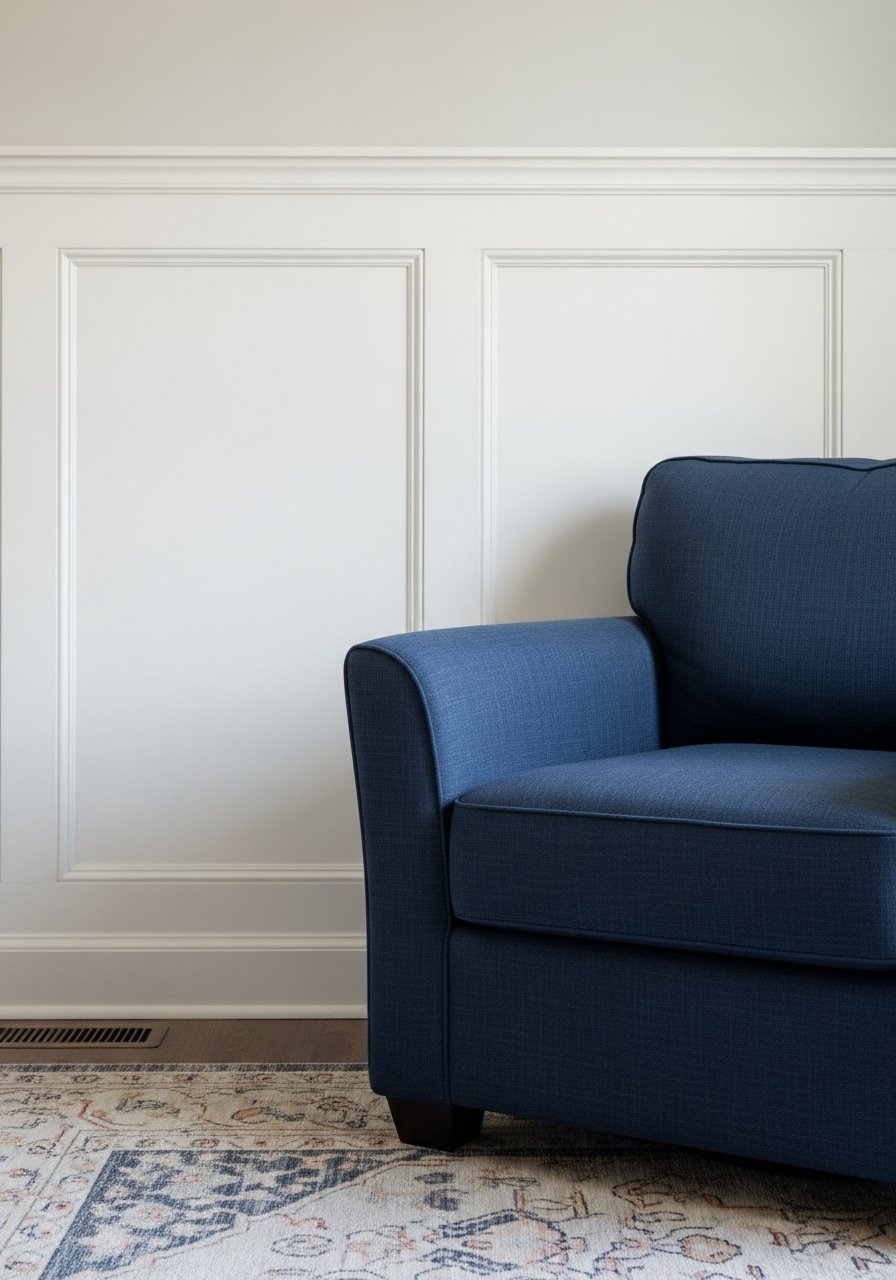
I installed board-and-batten and painted it white for texture. It made the room feel crafted instead of flat. I then added a navy chair to bring in color without paint. I once painted the whole room navy which felt heavy—this is better.
It’s a subtle architectural move that lifts simple blue-and-white schemes.
What You’ll Need for This Look
18. Navy Bedding with White Piping for a Tailored Bed

Navy bedding with white piping reads sharp and tailored. It’s cleaner than solid navy alone. I once opted for stitched piping on poor fabric and it puckered; choose good-quality cotton sateen.
It’s a refined look that stays grounded and classic in blue-and-white designs.
What You’ll Need for This Look
19. Indigo-dyed Rug with White Bedding for Contrast
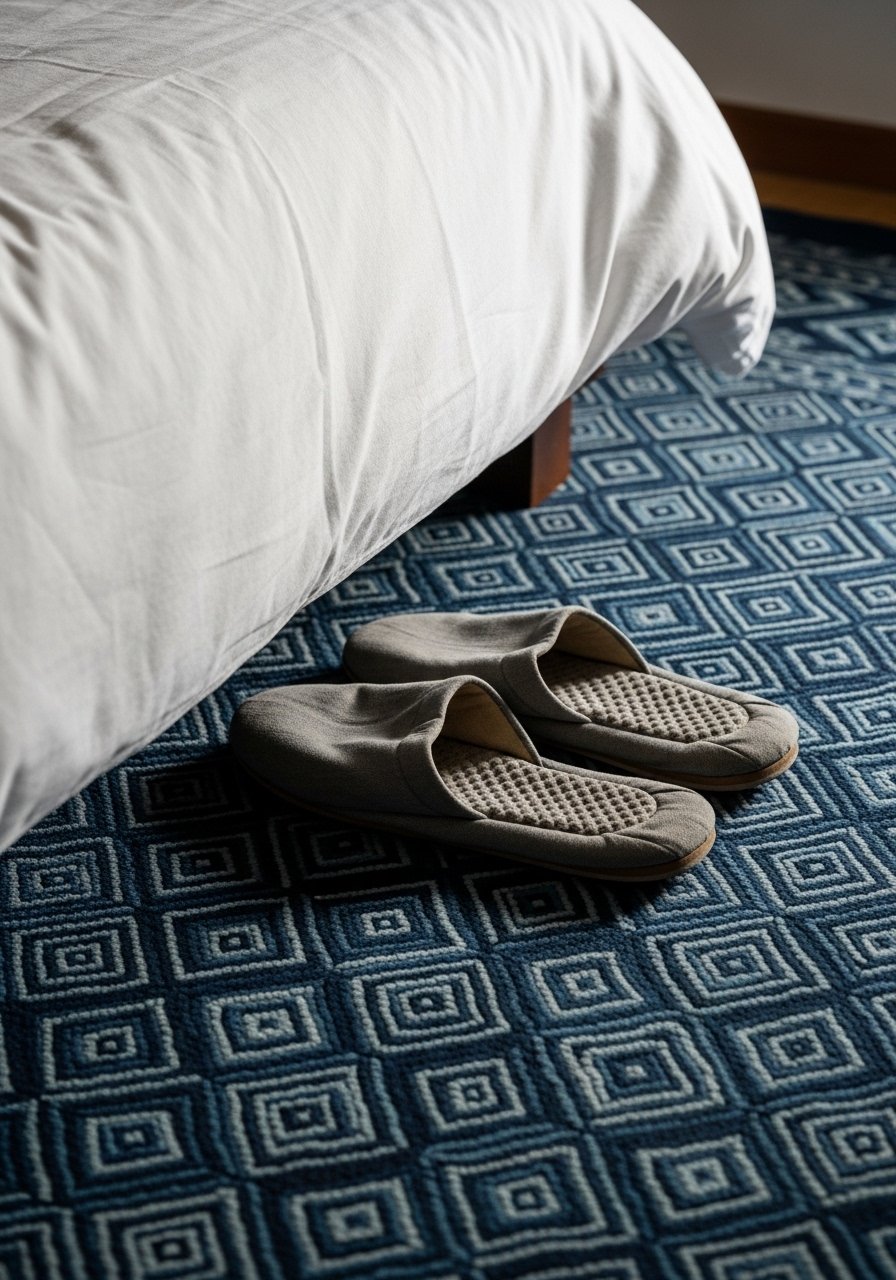
An indigo rug brings a handcrafted texture underfoot and keeps the top of the bed light. I learned size matters—too small made the rug look like an accent mat. A large rug anchors the whole bed.
It hides daily life and keeps the room feeling intentional and relaxed.
What You’ll Need for This Look
20. Blue Slipcovered Chair with White Throw
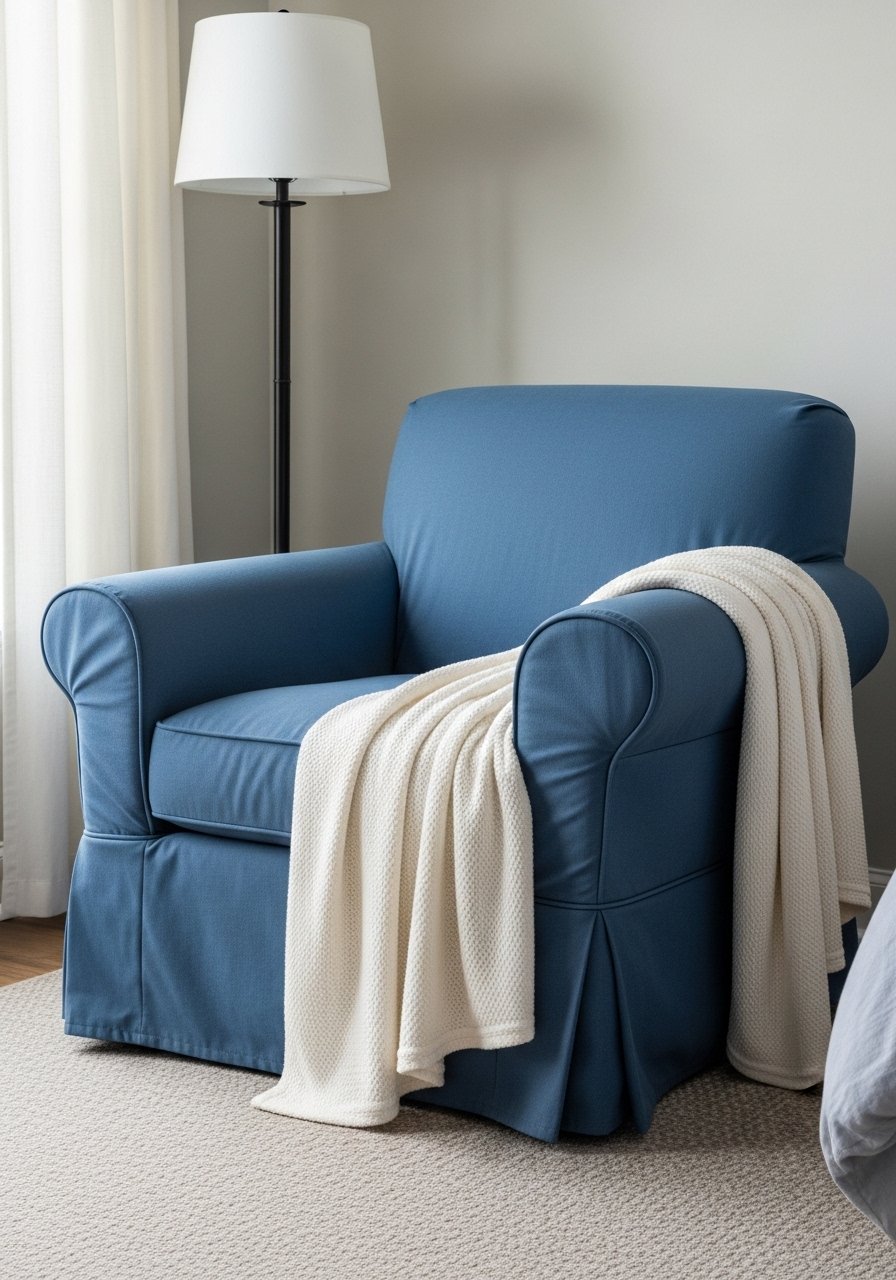
I added a blue slipcovered chair in the corner for reading. The white throw softens the chair and ties it to the bed. I once bought a fitted chair cover that didn’t fit—measure first or go with a relaxed slipcover.
It’s an easy way to add seating that feels like part of the conversation.
What You’ll Need for This Look
21. Blue Accent Shelf Styling with White Objects
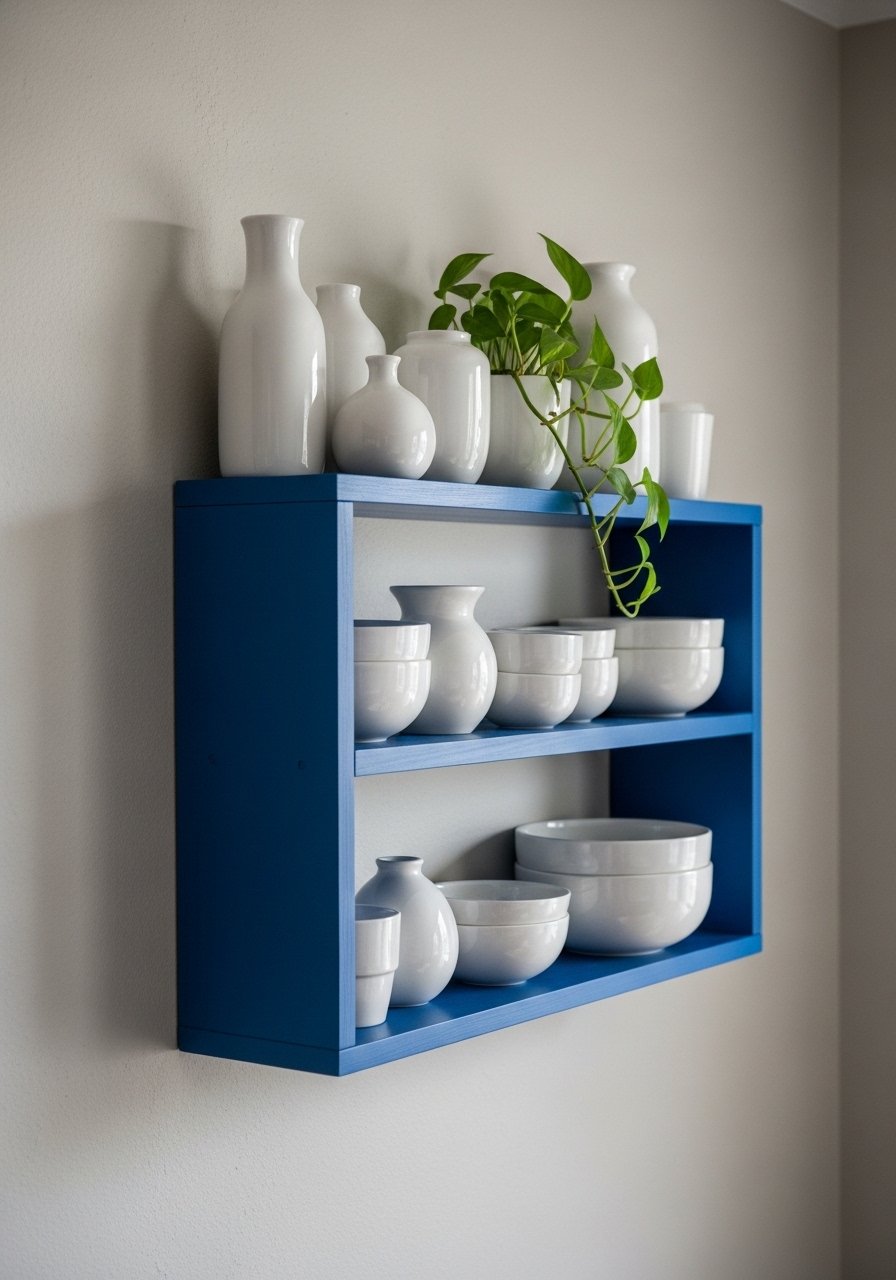
I painted a shelf blue and styled it with white ceramics and a small plant. It became a little vignette that reads curated. My first shelf had too many items; now I leave breathing room between pieces.
This small visual echo ties the room together without major changes.
What You’ll Need for This Look
22. Blue-and-White Striped Roman Shades
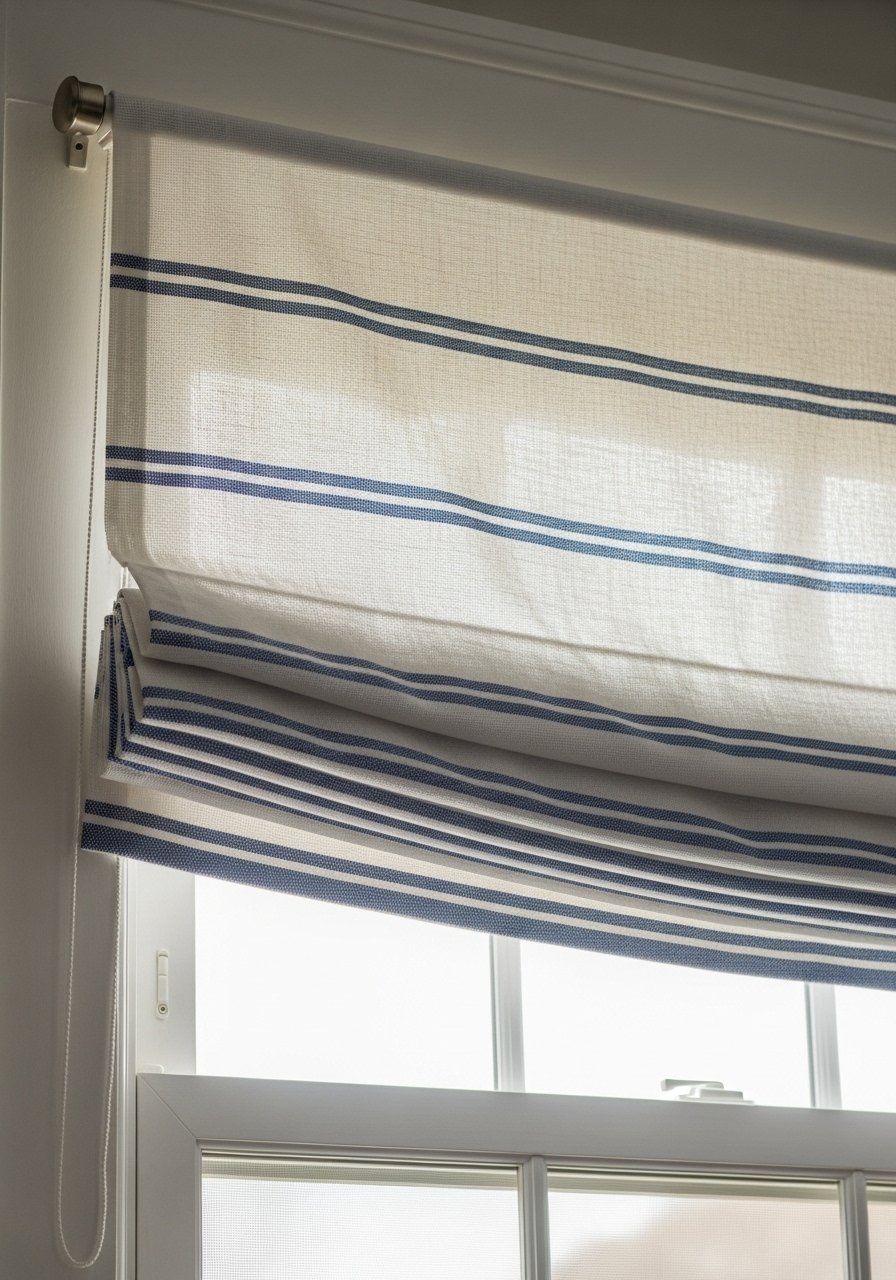
Roman shades with blue stripes add structure to the window and warmth to the room. I used to prefer blinds, but the fabric softens the space. Make sure to install the shade high enough to create the illusion of a taller window.
They’re neat and visually pleasing, especially with white trim.
What You’ll Need for This Look
23. Blue Accent Bench with White Bed Linen Balance
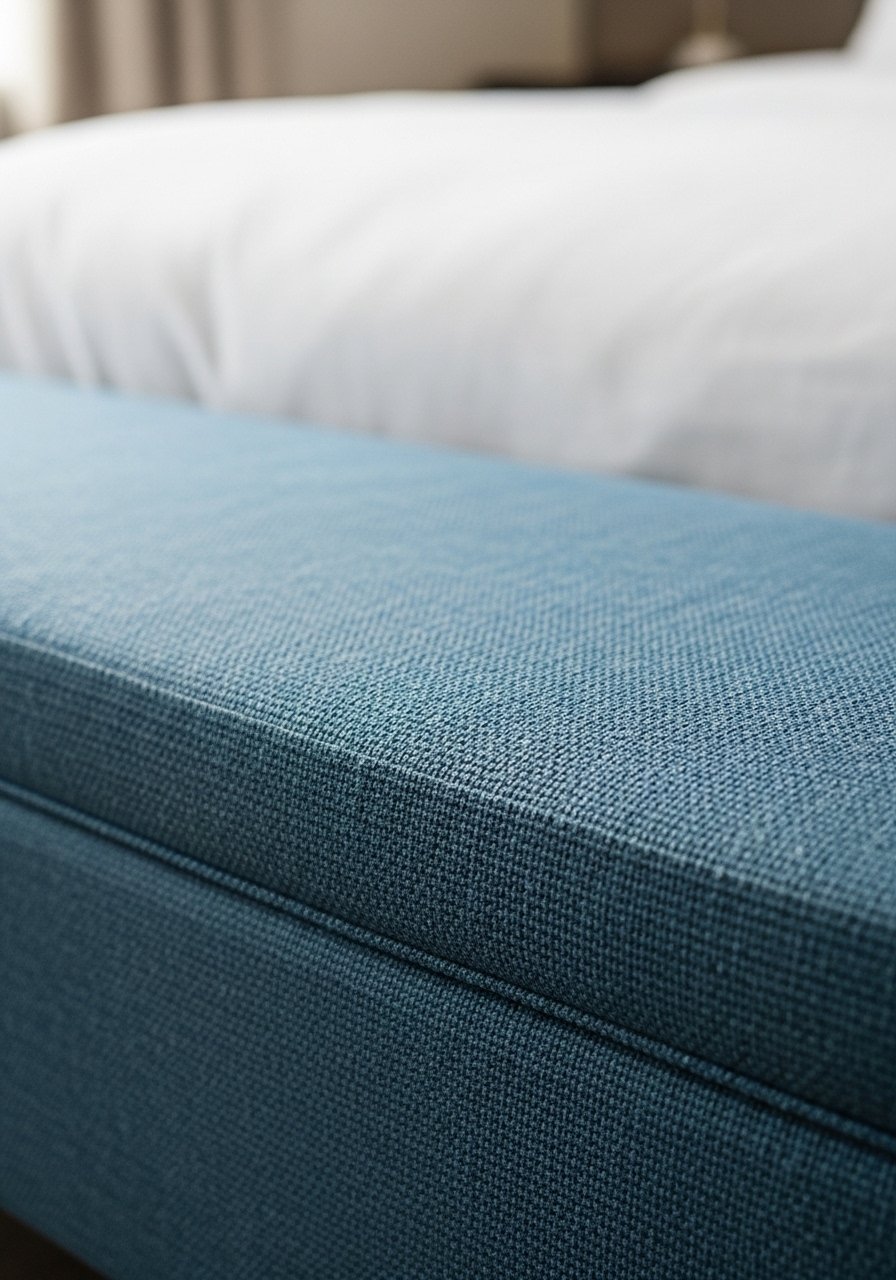
An upholstered blue bench gives color low in the room and a place to put on shoes. I once picked a bench that blocked a drawer—measure circulation first. When positioned right, it balances white linens and offers function.
It reads thoughtful and makes daily routines easier.
What You’ll Need for This Look
24. Monochromatic Blue Palette with White Accents
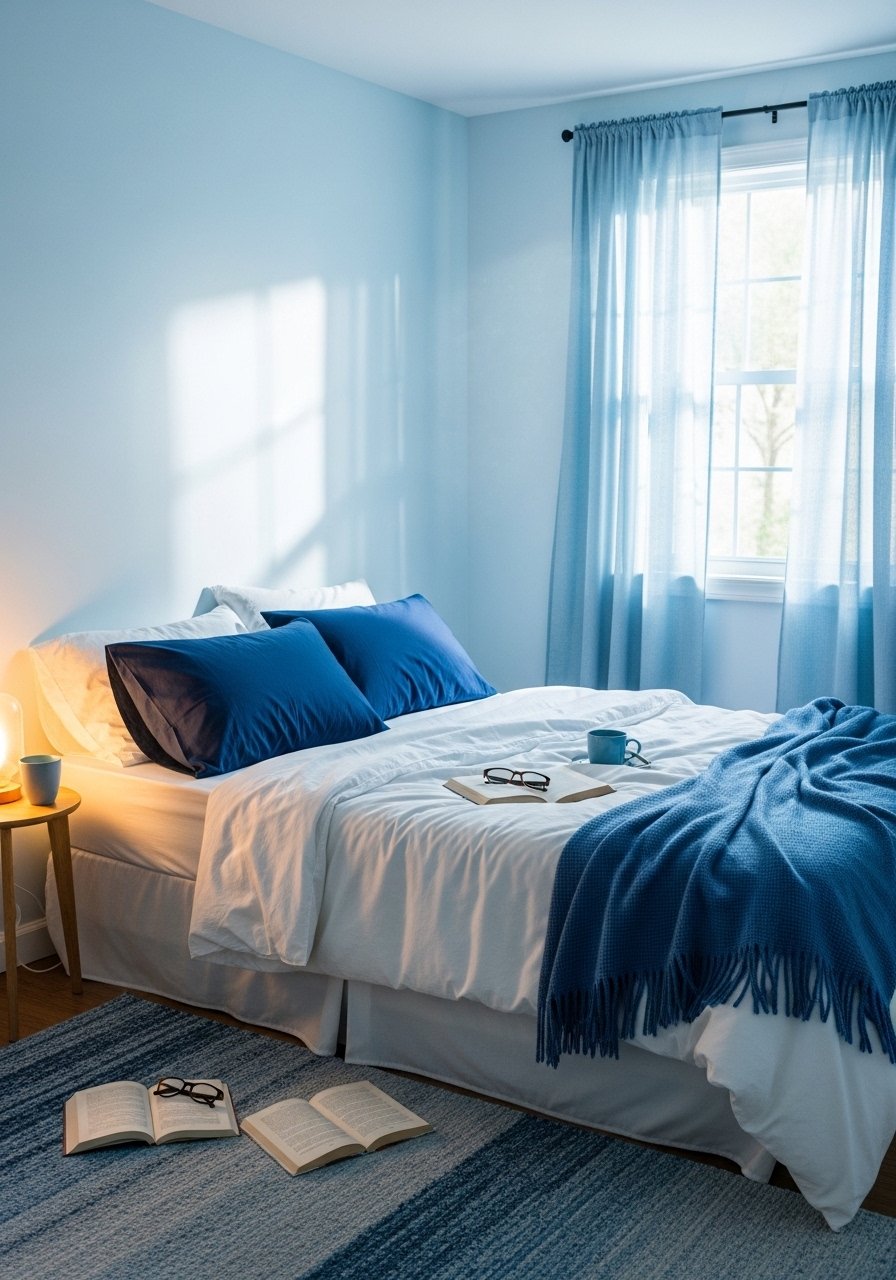
I tried a monochrome blue scheme with white accents for a cozy, enveloping feel. I mixed soft denim blues, indigo, and navy to avoid flatness. My early attempts used one shade and it felt boring; variation is the trick.
White accents keep it fresh and break up the color without violence.
What You’ll Need for This Look
Final Thoughts
Blue and white bedrooms can feel calm, cozy, or crisp depending on texture and placement. You don’t need to do everything here—pick one or two ideas that fit your room and try them.
I started with small swaps and kept only what felt right. Take your time, measure, and enjoy the process.