My music room started as a corner piled with guitar cases and sheet music stacks. It felt cramped, dusty, like a forgotten closet. I’d sit there to play, but the clutter pulled focus from the music.
One day, I moved one chair and everything shifted. The room breathed. Instruments settled into place.
Now, it invites me in. Warm, balanced. Ready for notes to fill it.
How To Decorate A Music Room At Home
This shows you how I settle a music room so it supports playing, not distracts. You’ll end up with a space that feels open yet full, instruments easy to reach. It works in any size room. Simple changes make it comfortable.
What You’ll Need
- Neutral fabric acoustic panels, 12×12 inches, set of 12
- Adjustable wooden music stand, black finish
- Wool area rug, 8×10 feet, gray tone
- Tall floor lamp, arched design, warm bulb
- Floating wood shelves, 24-inch length, white
- Vinyl record storage crate, mid-century style
- Armchair with ottoman, linen upholstery, beige
- Framed sheet music art prints, set of 3
Step 1: Clear the Floor and Zone Your Instruments
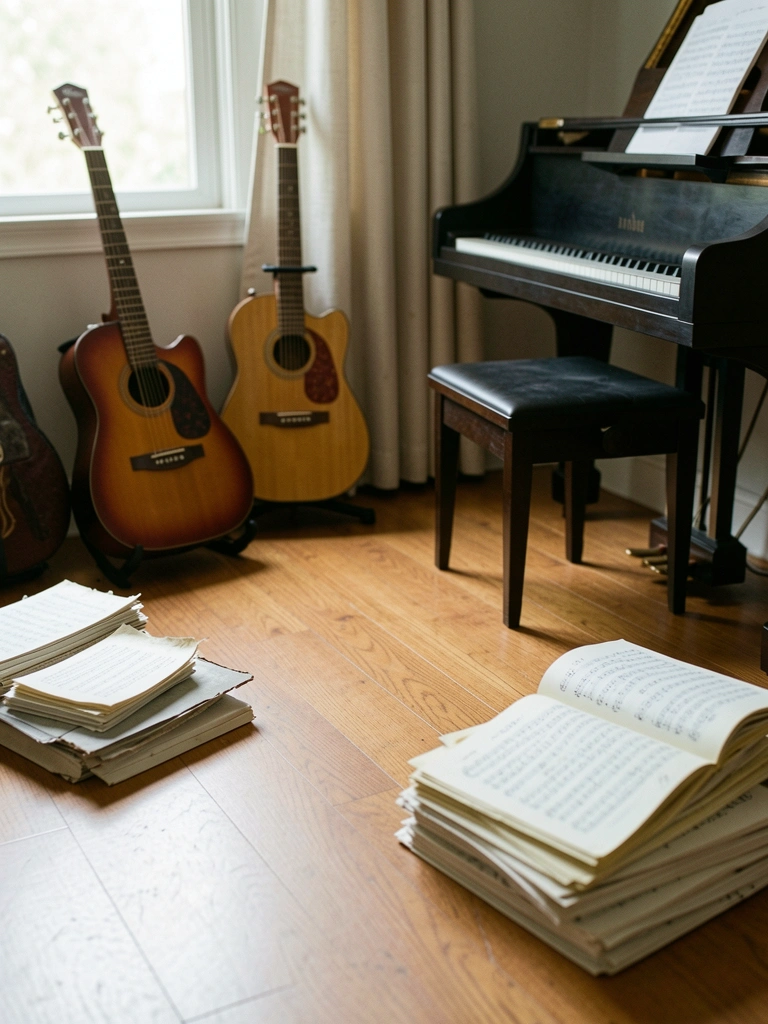
I start by pulling everything to the center. Instruments on the floor, no walls touched yet. This lets me see the room’s natural paths. Why? A music room needs flow—you walk to grab a pick, not trip over cords.
Visually, the floor opens up. Light hits even corners. One insight: most miss how empty floor grounds the space, makes walls recede.
Don’t cram everything against walls. That boxes you in. Leave 2 feet around your main instrument. Now it breathes.
Step 2: Anchor with Your Main Instrument
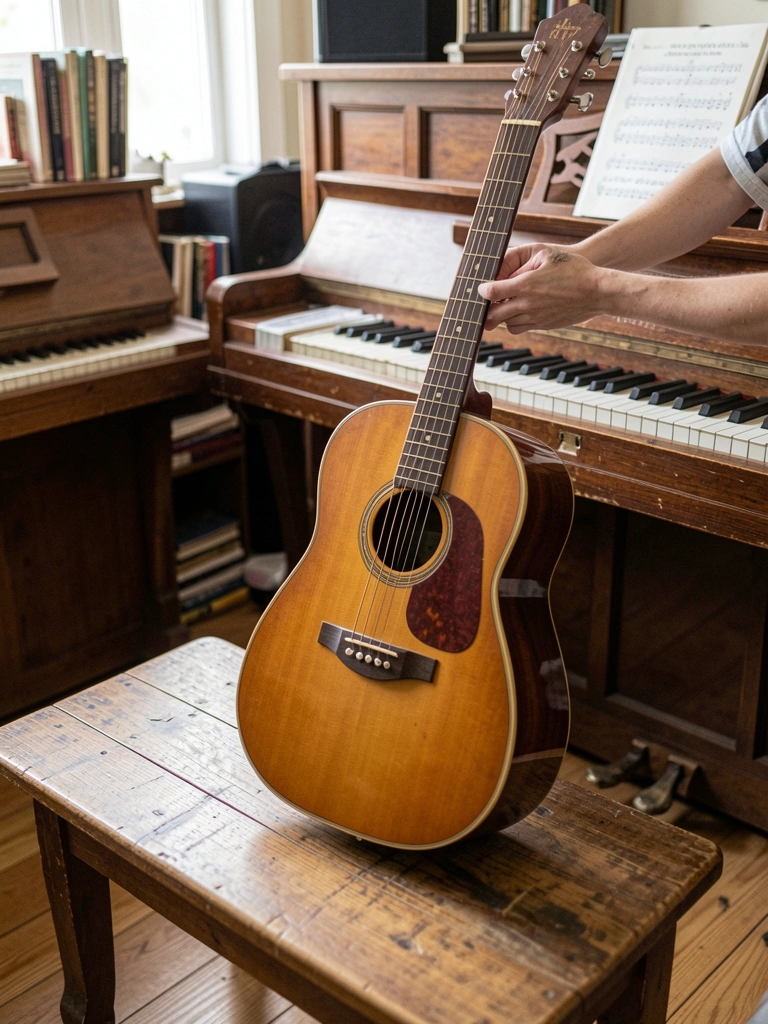
I pick my piano or guitar—the heart of the room—and set it where light falls best. Facing the window, not a dead corner. This draws your eye first, sets the room’s rhythm.
The space shifts: everything orbits it now, calm and directed. People overlook sightlines—sit where you play and check views. Clutter fades.
Skip hiding it away. Face it out. Mistake avoided: it becomes the quiet focal point.
Step 3: Layer in Seating and Surfaces
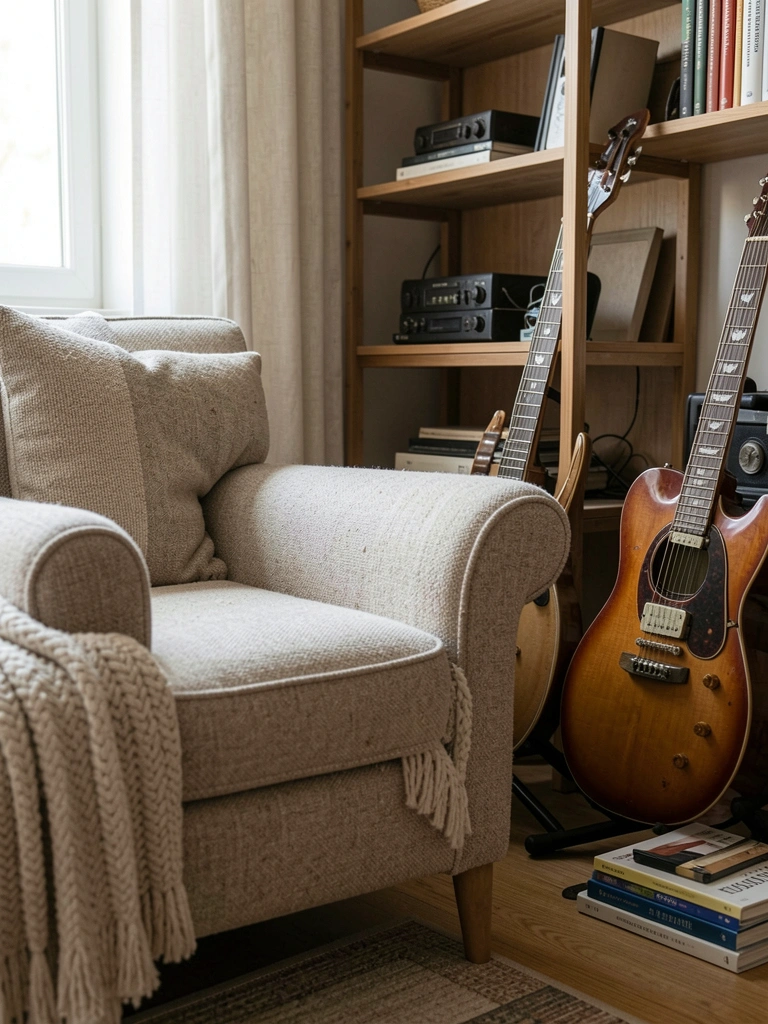
Next, I drop in the armchair near the anchor, then shelves above for scores. Low to the ground first—ottoman for feet during long sessions. Balance keeps it from tipping crowded.
Walls feel supported now, not bare. Insight: surfaces at elbow height make grabbing sheet music fluid, no reaching.
Avoid floating furniture. Pull it close to instruments. One chair too far feels lonely.
Step 4: Soften Walls with Sound-Friendly Layers
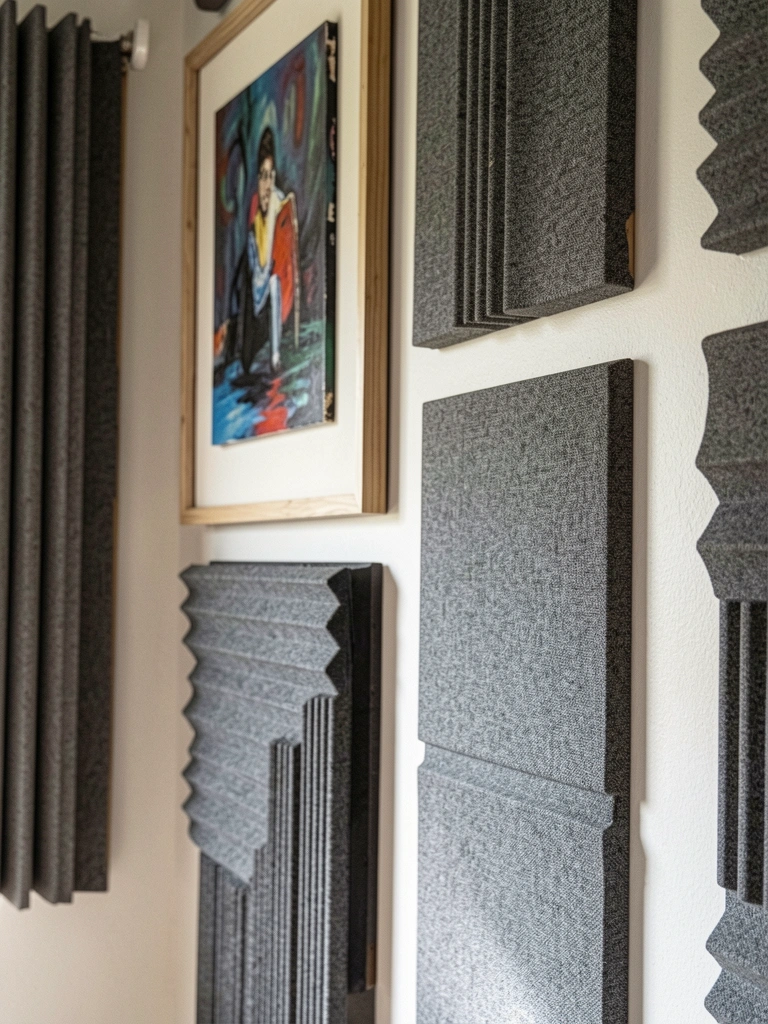
I hang acoustic panels low behind instruments, then sheet music art higher. Not full coverage—just enough to warm echoes without deadening sound.
Room gains depth, notes linger nicely. Most forget walls amplify chaos; these tame it gently.
Don’t overdo patterns. Stick to tones that blend. Keeps focus on music, not decor.
Step 5: Ground and Light the Edges
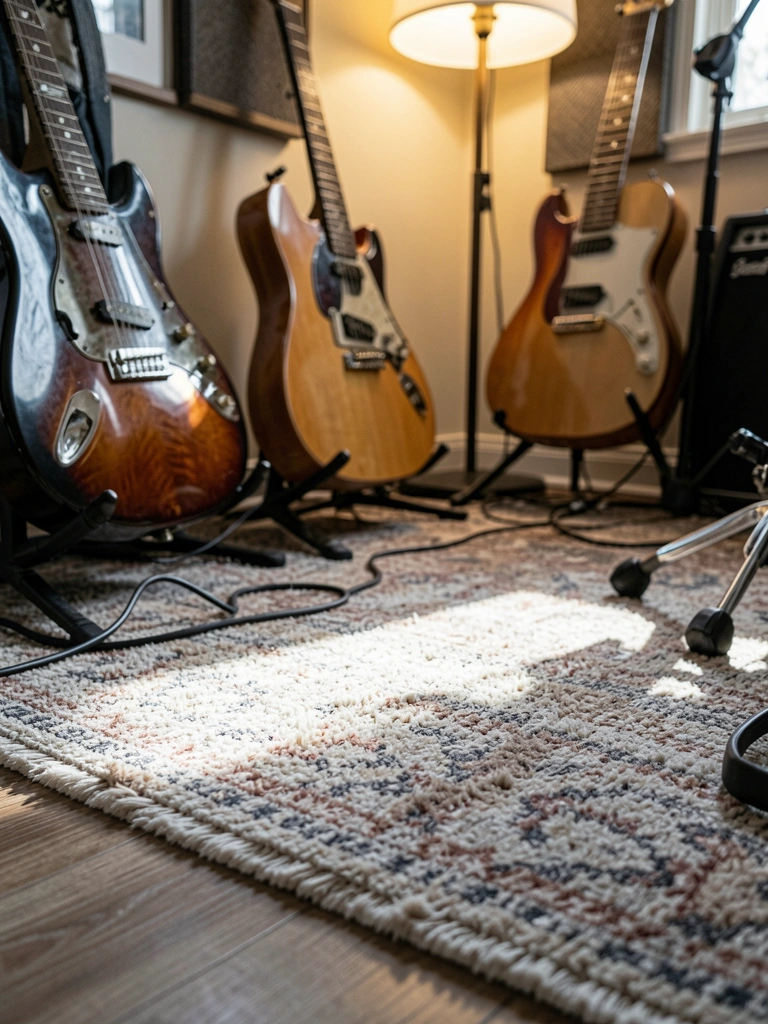
Rug under the anchor zone anchors sound and feet. Floor lamp in the far corner washes light evenly—no harsh spots.
Edges pull in, space feels complete, cozy for late nights. Insight: light from side mimics stage feel without glare.
Skip center rugs—they split flow. Tuck cords now. Room settles.
Arranging Instruments Without Clutter
I’ve tried stacking guitars everywhere. It chokes the air. Instead, I limit wall hooks to three, rest in open stands.
- Group by type: strings one side, percussion opposite.
- Leave negative space between—lets dust settle less.
- Test play: can you move without knocking?
This keeps the room light. Instruments wait patiently.
Color Choices That Stay Playable
Dark walls swallowed my first setup. Now, I stick to warms—grays, beiges—with wood accents.
Cool tones tire eyes during practice. Wood brings life.
- Rug in muted gray grounds everything.
- Art in black frames pops without overwhelming.
- One bold pillow if needed—test at night.
Balance lasts through seasons.
Quick Updates for the Space
Sheet music yellows. I swap frames yearly.
- Add plants near windows—filters light softly.
- Rotate records on shelves—keeps eyes fresh.
- Dimmer switch saved my evenings.
Small shifts renew without overhaul. Feels lived-in.
Final Thoughts
Start with one instrument placed right. The rest follows. You don’t need perfect—you need it to call you back to play.
Doubts fade once you sit there. It works because it fits your hands, your sound.
Your music room waits. Make it yours.