My small office desk always felt cramped. Papers piled up. The lamp cord tangled everything. I stared at it daily, wanting focus without chaos.
One afternoon, I cleared it all. Started over. Now it works for me—simple, steady.
You know that feeling. Tight space, big work. This fixes it.
How To Decorate An Office Desk For A Small Workspace
This shows you how I settle my desk in a small workspace. It ends up balanced and calm. You get a spot that pulls you in, not pushes you away. It’s straightforward. I do it when mine drifts off.
What You’ll Need
- Small matte black desk lamp, 12-inch height
- Slim wooden tray organizer, 10×6 inches
- Faux fiddle leaf plant in 6-inch pot
- Leather notebook, A5 size, tan
- Set of three brass desk clips
- Cord organizer clips, black, pack of 10
- Minimalist wall calendar, 8×10 inches
- Soft gray desk mat, 24×12 inches
Step 1: Clear and Anchor the Center
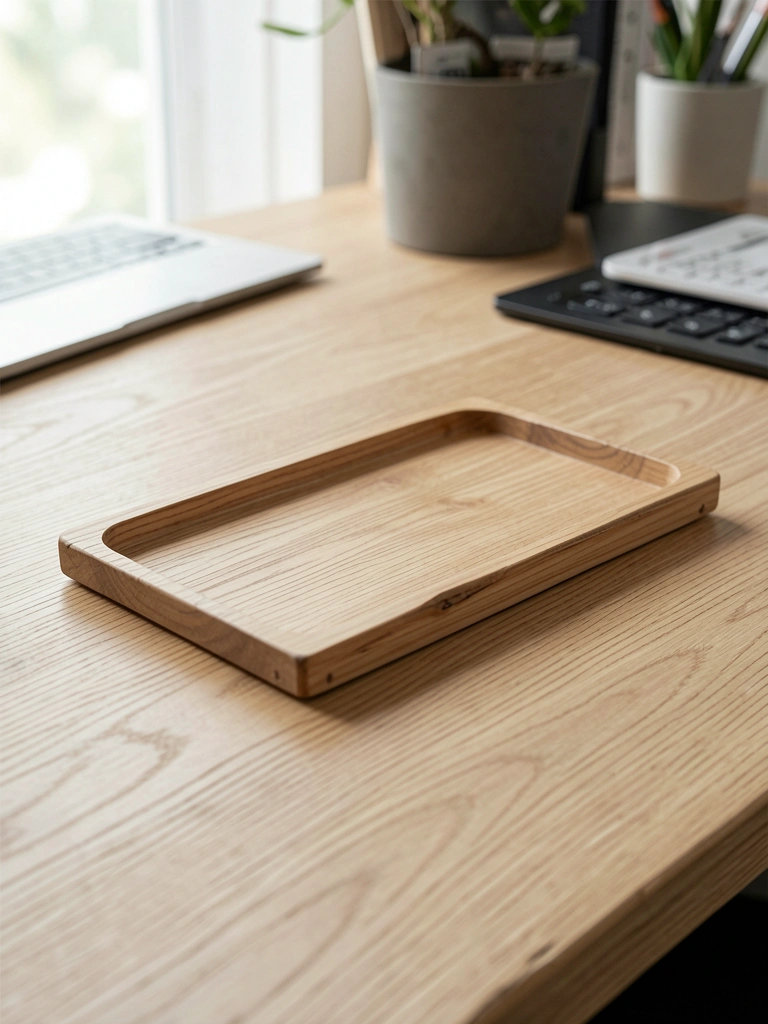
I start by wiping my desk bare. Every pen, note, gone. Then I drop the wooden tray right in the center. It grounds everything.
Visually, the surface breathes now. Space opens up around it. The tray holds my daily musts—keys, phone—without scatter.
People miss how one piece sets the rhythm. It pulls your eye steady. Avoid stacking extras on it early; that crowds fast.
I feel settled here. Work flows better.
Step 2: Build Height on One Side
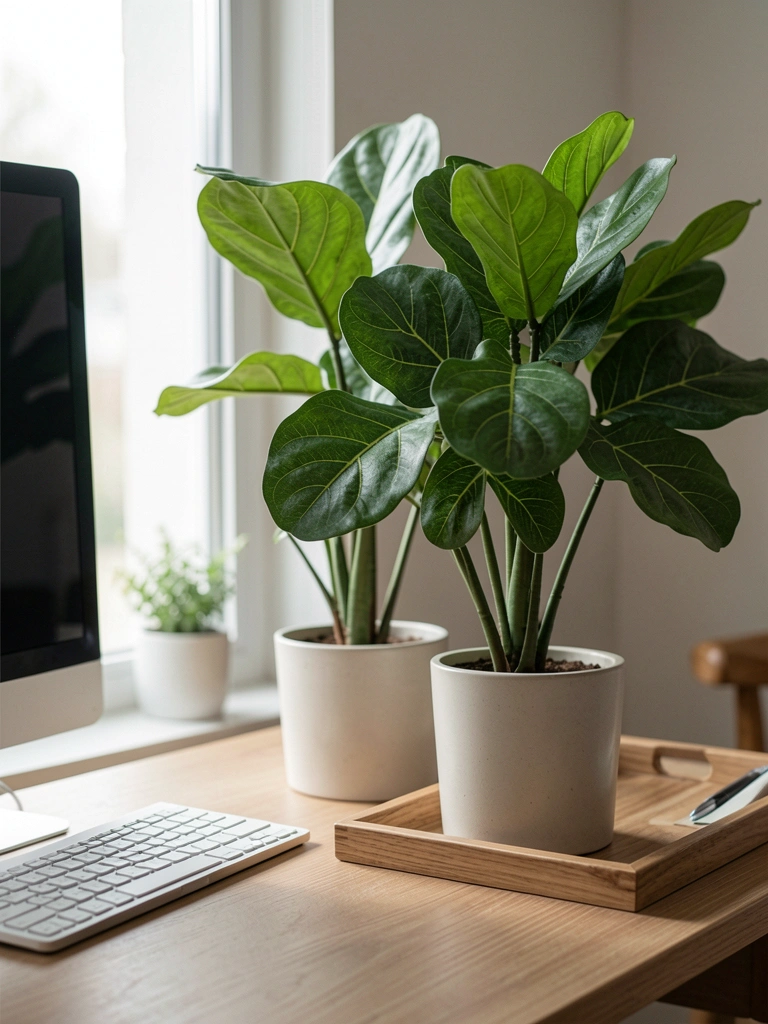
Next, I place the faux plant on the left. Tall but slim, it rises without blocking light. About 12 inches high, it fits tight spots.
The desk gains layers now. Flat feels done; height adds life. Balance tilts gentle, not top-heavy.
Most overlook side asymmetry—it keeps it from stiff. Don’t center it; that boxes the space. Lean it toward the back.
My eye rests easier. The green warms it.
Step 3: Layer Functionals Low
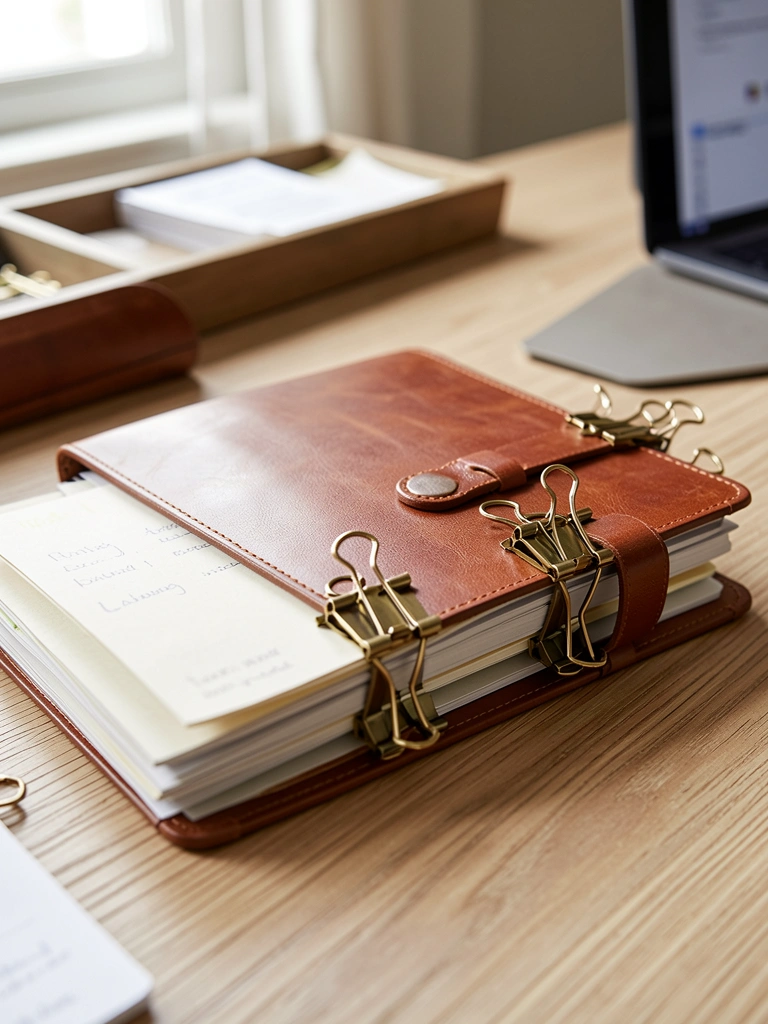
I slide the leather notebook next to the tray, low profile. Brass clips secure a few notes on top. Keeps hands free.
Now it looks lived-in, not empty. Items nest, no sprawl. The low layer supports the plant’s lift.
Folks forget to group by use—pens here, notes there. Mistake: loose papers everywhere. Clips change that.
I grab what I need quick. Comfortable rhythm.
Step 4: Light and Tuck Cords
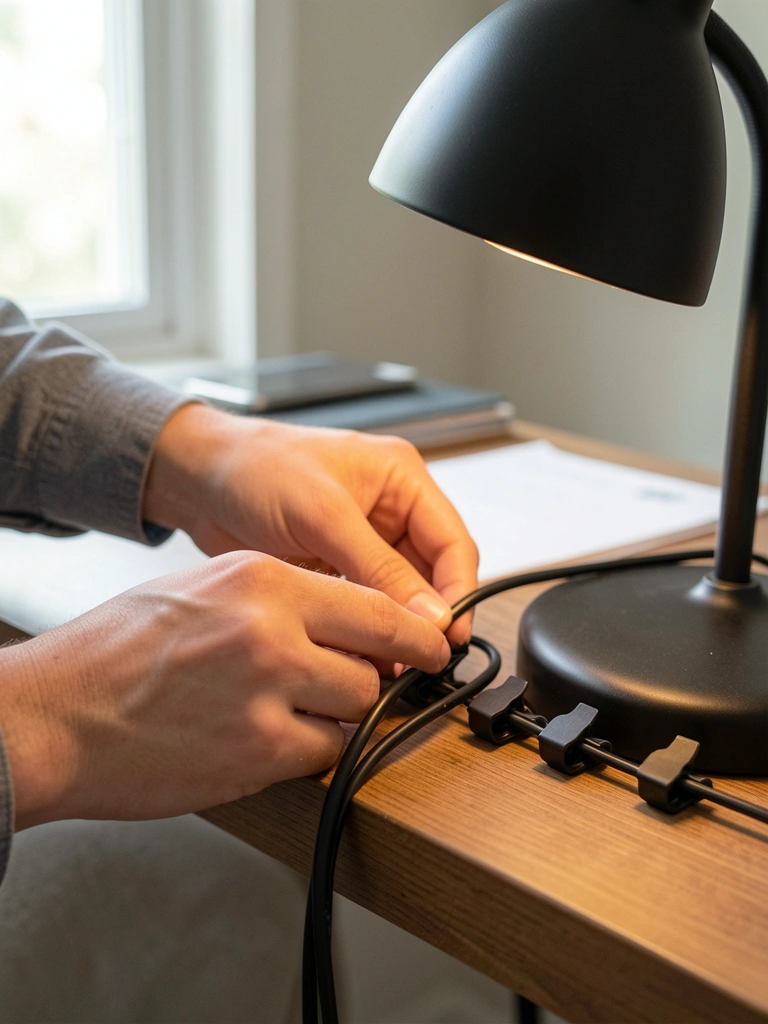
The small lamp goes right side, angled in. I clip cords under the edge. Tidy, out of reach.
Light pools soft now. Desk glows even at dusk. No glare fights the windows.
Insight: light balances the plant’s shadow. Don’t plug in loose—trips kill the calm.
I work late without strain. Steady feel.
Step 5: Personalize and Balance Edges
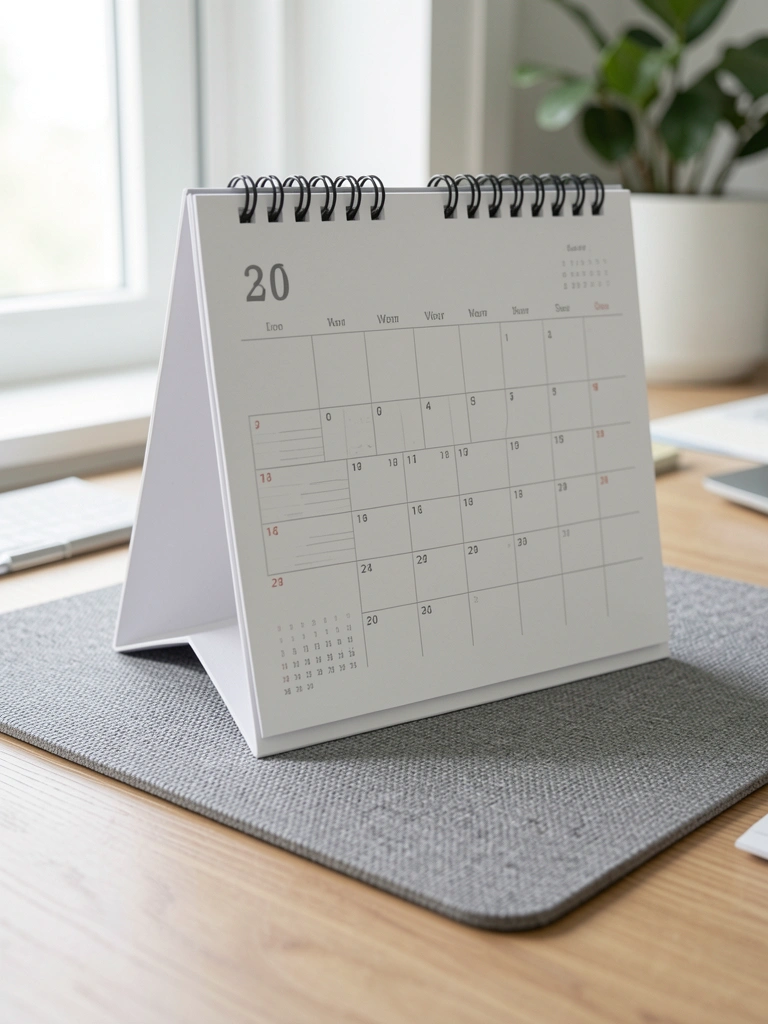
Last, lean the calendar against the wall, far right. Roll out the desk mat beneath. It frames the whole setup.
Edges settle now. No bare spots. The mat muffles mouse clicks, adds quiet comfort.
People skip mats—they protect and unify. Avoid overstuffing edges; breathe room for hands.
My desk holds me through the day. Intentional, mine.
Keeping Your Desk Functional Daily
I reset mine weekly. It stays clear.
- Wipe surface mornings.
- Rotate plant side if light shifts.
- Cull notes in clips.
This keeps the balance. No drift back to mess.
Work stays smooth. I notice the difference.
Avoiding Clutter in Tight Spots
Small desks tempt piles. I limit to tray items.
Watch the front edge—keep it open for knees.
- One plant max.
- No towers of books.
Feels open. Focus sharpens.
Refreshing for Seasons
Twice a year, I swap one piece. Plant for a candle in winter.
Colors stay neutral. Gray mat year-round.
It evolves without overhaul. Stays comfortable.
Final Thoughts
Start with just the tray today. Build from there.
Your desk will feel right. Balanced for you.
It’s small changes. They stick. Mine has, for years.